

Do not buy the maximum amount of help by default.
What part of daily life is actually failing?
When does it happen often enough to need reliable coverage?
What happens when the usual family helper cannot cover it?
Which needs belong to a clinician rather than household support?
Quick answer
The best respite plans are specific. “I need a break” is real, but it becomes actionable when the family identifies which hours are hardest to cover, what the older adult needs during those hours, and what would make the handoff feel normal rather than disruptive.
For families in Beverly Hills and Bel Air, the most useful next step is to turn a broad concern into one concrete decision.
Across the broader local market, 9,808,667 people with 15.2% age 65+, 6.1% age 75+, and 1.9% age 85+. Local planning commonly involves discreet private-duty care; household staff coordination as recurring family-care themes in Beverly Hills and Bel Air.
What matters locally
A useful plan has to fit the place as well as the person. These are the local facts that should shape the conversation. Around Beverly Hills and Bel Air, families are making this decision in the context of discreet private-duty care; household staff coordination; that changes which alternatives and logistics deserve attention first.
- Older-adult context. Across the broader local market, 9,808,667 people with 15.2% age 65+, 6.1% age 75+, and 1.9% age 85+.
- Local family pattern. Local planning commonly involves discreet private-duty care; household staff coordination as recurring family-care themes in Beverly Hills and Bel Air.
- Hospital and rehabilitation context. Very strong Los Angeles referral depth: California Rehabilitation Institute, Cedars-Sinai and UCLA support a deep hospital-to-rehab-to-home ecosystem.
- Scope boundary. California’s Home Care Services Consumer Protection Act requires Home Care Organizations serving elderly/disabled clients with non-medical home care/ADL assistance to be licensed; affiliated Home Care Aides must be registered and background-cleared. Personal-care scope: Non-medical home care includes assistance with activities of daily living for elderly and disabled clients; remain outside skilled nursing/medical services unless separately licensed.
- Local caregiver-support resource. Los Angeles County: Family Caregiver Support Program: Los Angeles County’s Family Caregiver Support Program provides caregiver information, counseling, training, support groups and respite-related support subject to eligibility.
Local logistics. Very high urban routing friction: canyon roads, Westside congestion and limited parking make dedicated premium-core caregiver zones important.
How to make the next decision smaller
The family can make the decision smaller by working through four steps:
1 Choose the relief window. Decide whether the family needs a few recurring hours, a regular day, coverage for an appointment, or another defined interval.
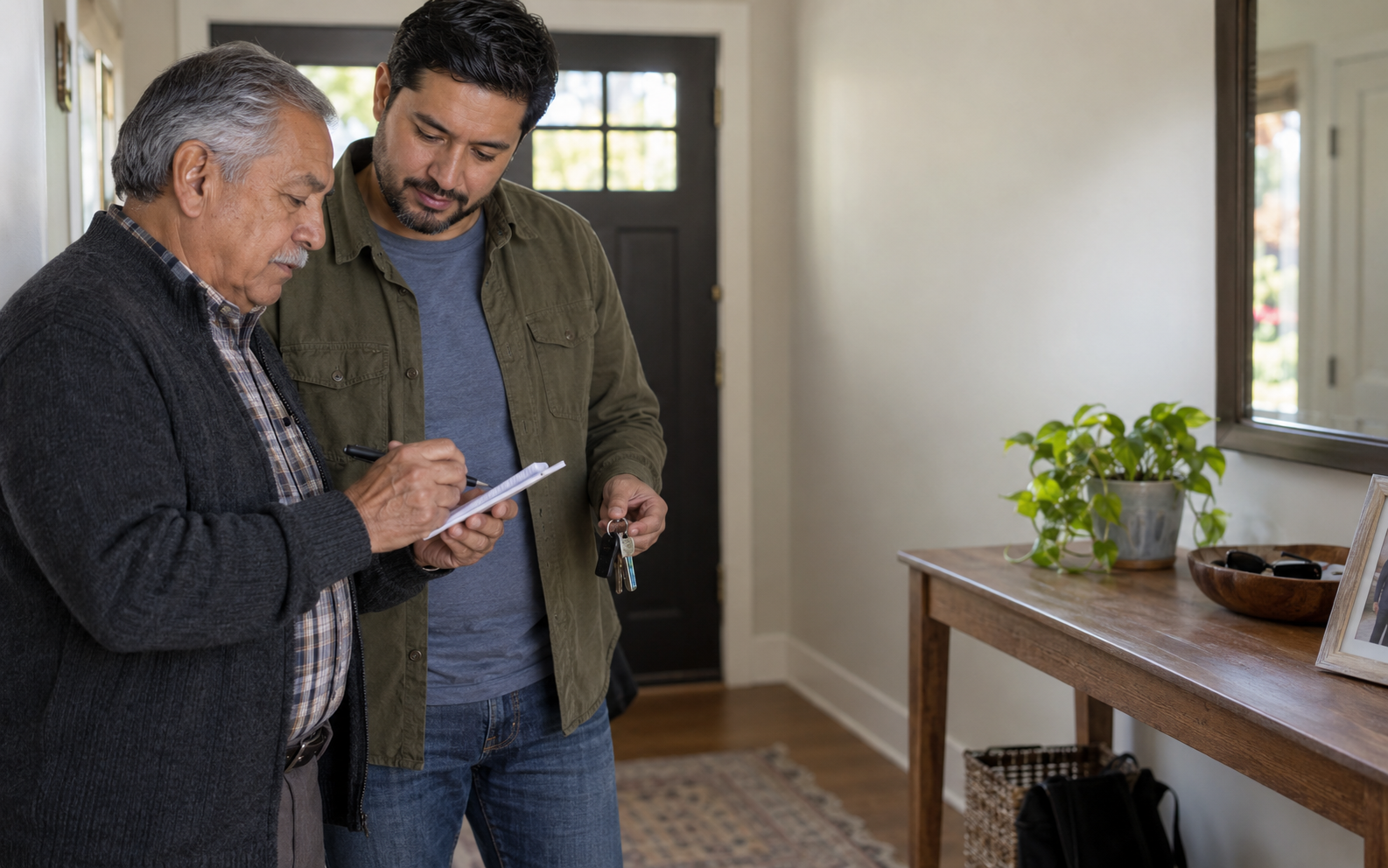
2 Write a simple handoff. Meals, mobility, preferred routines, emergency contacts, communication style and known triggers should fit on a practical one-page handoff.
3 Compare community and in-home options. Adult day programs, caregiver-support programs, family rotation and private in-home support solve different kinds of respite needs.
4 Plan the next break before the first one ends. A recurring break is easier to sustain than waiting until the caregiver is already depleted.
A useful family worksheet: make three columns, what happens now, who currently covers it, and what happens when that person is unavailable. For respite care, the gaps become much easier to see when they are attached to a time and consequence.
Use respite resources without promising eligibility
Public caregiver-support and respite programs can be part of the family’s plan, but eligibility, funding and current provider capacity should be confirmed directly with the program.
That boundary belongs in the decision itself. It tells the family which needs can stay in a non-medical plan, which fit a public or community resource, and which require a licensed clinical professional.
Before choosing a provider or program
A short provider interview should cover at least:
- What exact hours need coverage?
- What routines must stay consistent during the handoff?
- Are there local caregiver-support or adult-day programs worth comparing?
- What is the emergency plan while the primary family caregiver is away?
Before choosing a provider, make sure you can explain the scope, timing, escalation plan, eligibility rules and what happens when needs change.
Questions families commonly ask
Does respite have to mean overnight care?
No. Respite can be a few hours, a recurring day, an adult-day program, or another defined period depending on the older adult’s needs and the available options.
Is respite only for dementia caregivers?
No. Family caregivers supporting frailty, mobility limitations, chronic illness or ordinary daily-living needs can also need planned relief.
How should we compare respite options?
Compare the older adult’s needs, the length and frequency of the break, the setting, eligibility, transportation and what tasks the respite option can actually cover.
Useful next steps
The page should hand the reader to the next relevant question through In-Home Senior Care | Dementia Home Care | Long-Distance Caregiving | How Much Care Does My Parent Need?; unrelated sibling pages stay out of the module.
Turn this into one next decision
You do not need to solve the next year today. Put the current routine on paper, identify the hardest recurring gap, and make the next decision around that specific problem.
Talk Through Your Care Needs