
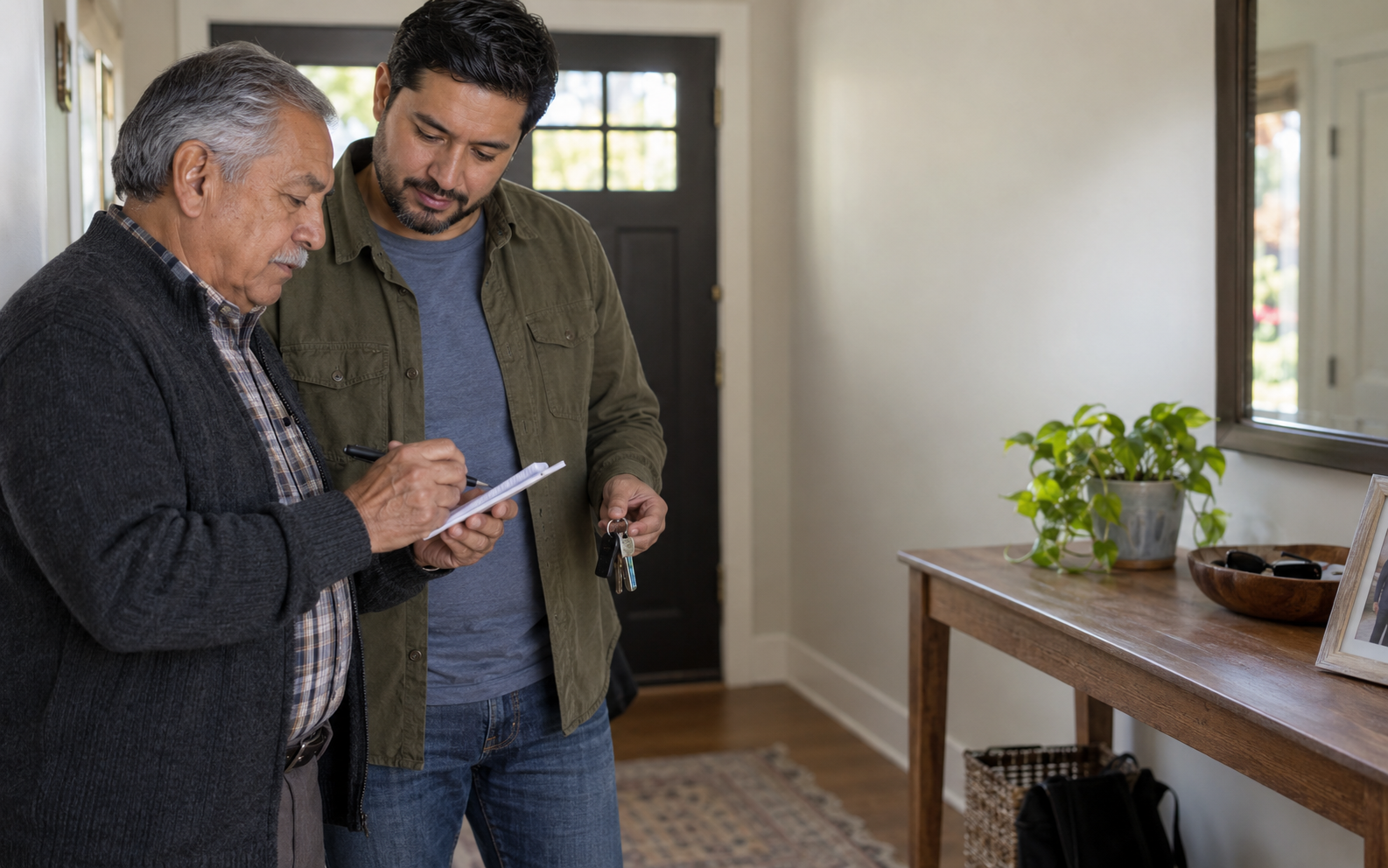
Dementia home-care planning works best when it starts with observable changes in memory, routine, judgment or evening patterns. It should not substitute for clinical evaluation or emergency help.
Do not buy the maximum amount of help by default.
What part of daily life is actually failing?
When does it happen often enough to need reliable coverage?
What happens when the usual family helper cannot cover it?
Which needs belong to a clinician rather than household support?
What changes the answer in Beverly Hills / Bel Air
- Travel time between home, appointments, errands and the people who can help.
- Which local resources, provider rules or transportation details need direct verification.
- How close reliable family or trusted contacts are when the normal routine breaks.
- Whether the home, schedule and household support can carry the plan week after week.
A practical way to decide
- Record the pattern
Write down what is changing and when it tends to happen. - Reduce friction
Simplify cues, routines, lighting, meals and transitions around the hardest parts of the day. - Plan supervision
Decide who notices when the pattern becomes unsafe or unmanageable. - Set escalation triggers
Identify the changes that require a clinician, emergency help or a different living plan.

Questions to ask before you decide
- What is the exact routine that needs a reliable answer?
- Who covers it now, and what happens when that person cannot?
- Which facts need direct confirmation in Beverly Hills / Bel Air before the plan is chosen?
- What change would tell us this plan needs to be revisited?
Keep the next step specific
Use the related guides below to organize the adjacent decision. Local research is context, not proof of current Alderwick availability, price, task scope or operating coverage.
What local context changes in Beverly Hills / Bel Air
Families here often need to plan around Discreet private-duty care; household staff coordination. The practical question is still the same: which routines need reliable support, and who can carry the plan when family availability changes?
- Very high urban routing friction — canyon roads, Westside congestion and limited parking make dedicated premium-core caregiver zones important.
- About 15.2% of the local fact-pack population is age 65 or older.
- Planning data show a median household income of $90,112 and median home value of $834,200; these are local context, not a prediction of a family’s budget or care needs.
- Low seasonal / ultra-affluent year-round signal — Beverly Hills/Bel Air demand is driven by wealth, aging in place and high-touch private-duty expectations rather than resort seasonality.
Confirm the current details that matter to your family directly with the relevant local source or provider.