
Understand the kinds of help families consider at home.
Each service page explains the problem it is designed to solve, questions to verify, and where non-medical household support stops.
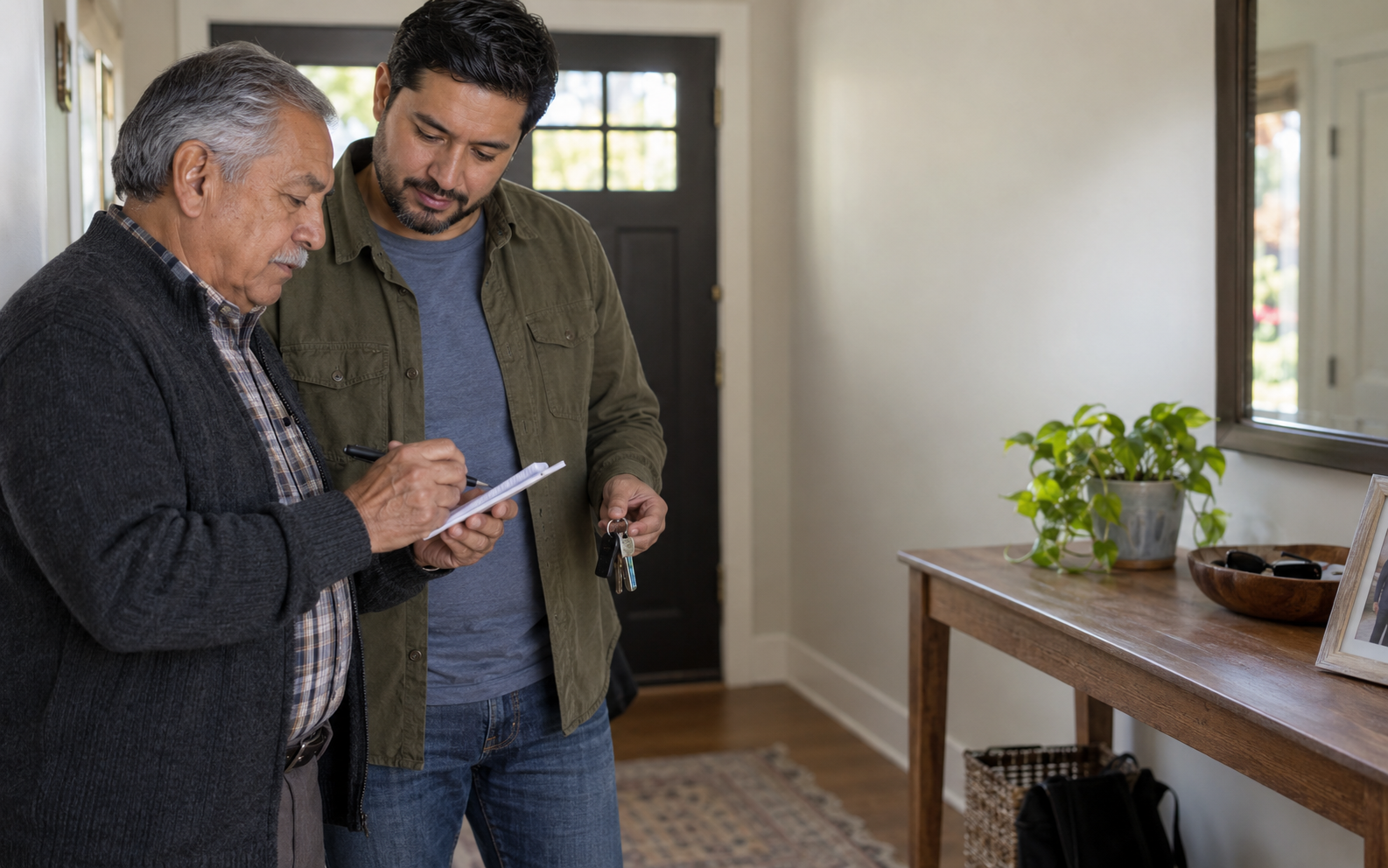
Then build the smallest reliable plan that closes the real gaps.
Start with the actual gap—not the package name.
In-Home Senior Care
A practical starting point for families trying to keep an older adult safe, comfortable and connected at home.
ExploreCompanion Care
Support for routines, conversation, activities and the practical parts of a day that can become harder to manage alone.
ExplorePersonal Care Assistance
A clearer way to think through bathing, dressing, grooming, toileting, mobility and other hands-on daily-living needs.
ExploreDementia Home Care
Planning support at home when memory, judgment, routines or supervision needs are changing.
ExploreRespite Care
A practical way to create reliable coverage so a family caregiver can rest, work, travel or simply stop carrying every shift alone.
ExploreOvernight Senior Care
Questions to work through when nighttime routines, wandering, toileting, falls or caregiver exhaustion are changing the care plan.
ExplorePost-Hospital Home Care
Household and daily-living support that can make the first days after hospital or rehabilitation discharge easier to manage.
ExploreSenior Transportation
A transportation plan for appointments, errands, community activities and the moments when a ride alone is not enough.
Explore
Describe the missed routine.
“Mom needs help” is hard to plan around. A concrete pattern is much easier to solve.
“We need somebody a few days a week.”
Try:“She is skipping lunch, missing two rides a week and getting overwhelmed after 5 p.m.”
You do not need to know the right care label first.
Tell us what has changed, what is becoming unreliable and where your family is located. Start with the situation; the label can come later.