
Do not buy the maximum amount of help by default.
What part of daily life is actually failing?
When does it happen often enough to need reliable coverage?
What happens when the usual family helper cannot cover it?
Which needs belong to a clinician rather than household support?
Quick answer
This decision gets easier when the family separates the immediate problem from everything that might happen later. In Belle Meade, Brentwood, and Franklin, companion support is most useful when the older adult is medically stable but the week is becoming harder because of isolation, meals, errands, routine or household follow-through. The goal is to identify the part of daily life that needs support first, then compare the most practical next step.
A recurring family-care issue in Belle Meade, Brentwood, and Franklin: Private-pay aging in place; family coordination. Use these figures as context, not as a prediction of what one household needs.
When companion support is the right conversation
Companion support becomes more concrete when the family looks at routine, travel and household context:
- Family logistics. A recurring family-care issue in Belle Meade, Brentwood, and Franklin: Private-pay aging in place; family coordination.
- Travel / routing friction. Moderate-high corridor routing friction: Franklin/Brentwood follow the I-65/Franklin Road corridor while Belle Meade sits across the Davidson County line near Hillsboro Pike. Peak Nashville traffic and cross-county assignments can create meaningful caregiver deadhead, so use tight north/south service zones.
- Housing and household context. Median household income is $135,594, median owner-occupied home value is $751,900, and homeownership is 78.8%; use those figures only as local context for aging-in-place and private-pay planning.
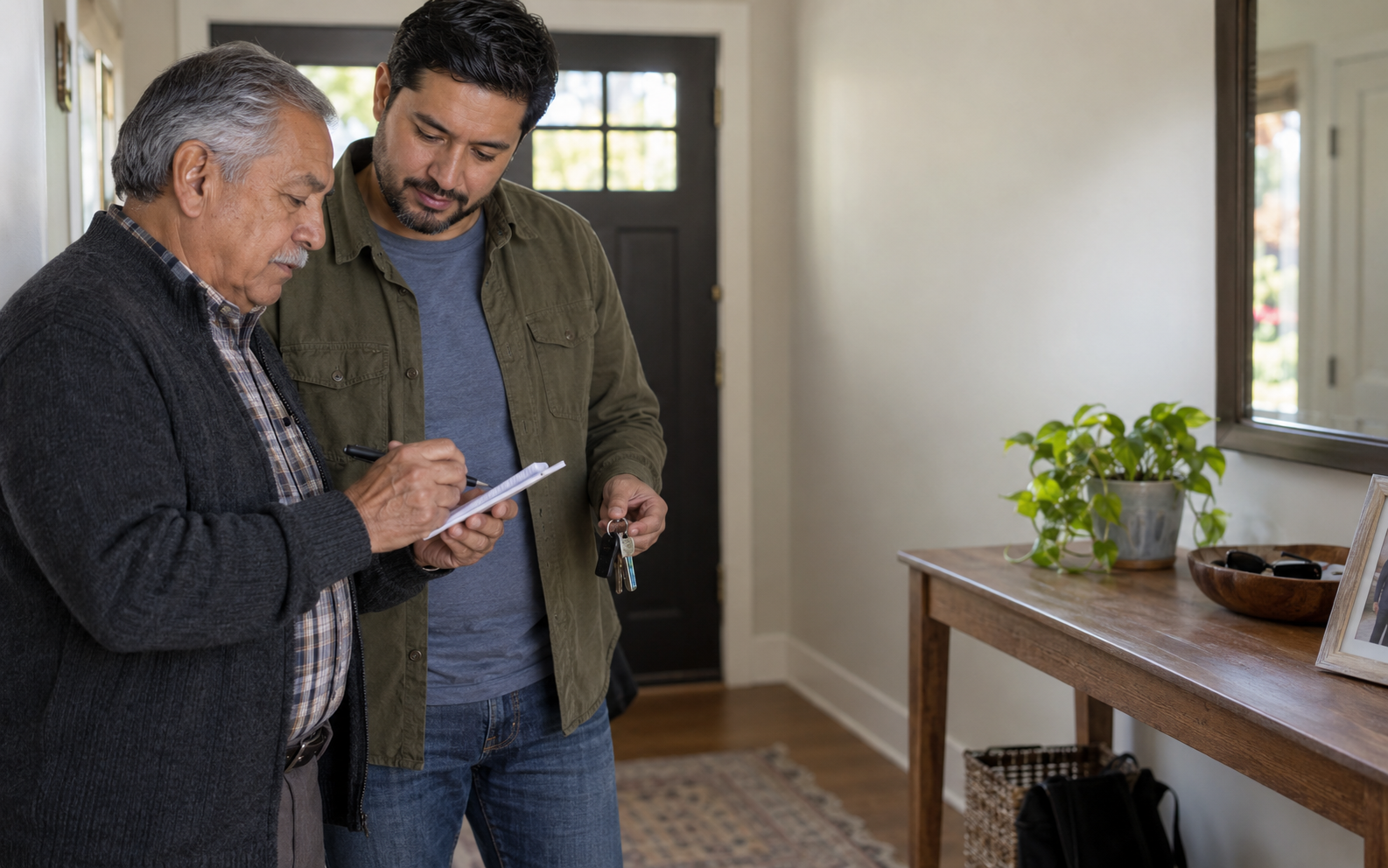
How local routines and geography change the plan
Companion support should create structure without taking over the older adult's life. A useful plan might center on meals, a grocery trip, a walk, household organization or a recurring social routine. If the need has become hands-on or clinical, the family should stop stretching the companion-care label.
Local planning in Belle Meade, Brentwood, and Franklin around Private-pay aging in place; family coordination. The family should turn that broad market context into a short list of tasks, timing constraints and backup needs that can be tested in real life.
What companion care is not
Companionship must not become a euphemism for unverified personal care. Families should ask separately about errands, transportation, meal preparation and hands-on tasks because the provider's policy may differ by market and state.
A recurring family-care issue in Belle Meade, Brentwood, and Franklin: Private-pay aging in place; family coordination. Moderate-high corridor routing friction: Franklin/Brentwood follow the I-65/Franklin Road corridor while Belle Meade sits across the Davidson County line near Hillsboro Pike. Peak Nashville traffic and cross-county assignments can create meaningful caregiver deadhead, so use tight north/south service zones. That local context helps families ask better questions about scheduling, access and the level of support that may be needed.
A light-touch weekly plan
Companion support works best when the plan is light enough to preserve independence but reliable enough to stop recurring gaps.
1 Track the routines that are slipping.
2 Choose the lightest-touch support that addresses them.
3 Keep personal-care and clinical tasks out of the companion-care assumption.
4 Reassess when the need changes.
The value of the sequence is that it produces something the family can observe. If the plan is not solving the actual gaps, change it rather than adding hours or complexity by default.
Questions to ask
- Is the real need social connection, household follow-through, transportation, meals or a mix?
- How often does the routine break down?
- Which tasks would cross into personal or clinical care?
Ask for clear answers about scope, scheduling and responsibilities, and verify clinical or licensing questions with the appropriate source.
Next step
Companion support should be reconsidered if the need becomes primarily hands-on personal care, clinical monitoring, repeated nighttime risk or continuous supervision.
Frequently asked questions
Is the real need social connection, household follow-through, transportation, meals or a mix?
Start with the specific problem behind the search for companion care and the times it occurs. That prevents the family from buying a broad solution for a narrow problem.
How often does the routine break down?
Verify address-specific resources, the provider's written scope, and any eligibility or clinical requirement that affects the plan in Belle Meade, Brentwood, and Franklin.
Which tasks would cross into personal or clinical care?
Use clinicians or emergency services for diagnosis, treatment, medication decisions, new medical symptoms or urgent safety concerns. Non-medical support should stay within its appropriate role.
Next step
Before the next conversation, write down the current gaps, when they occur, the people or resources already involved, and the questions that still need an answer. That turns a broad concern into a usable planning brief.
Talk Through Your Care Needs. Service availability, timing, pricing and exact task scope should be confirmed for in Belle Meade, Brentwood, and Franklin.