
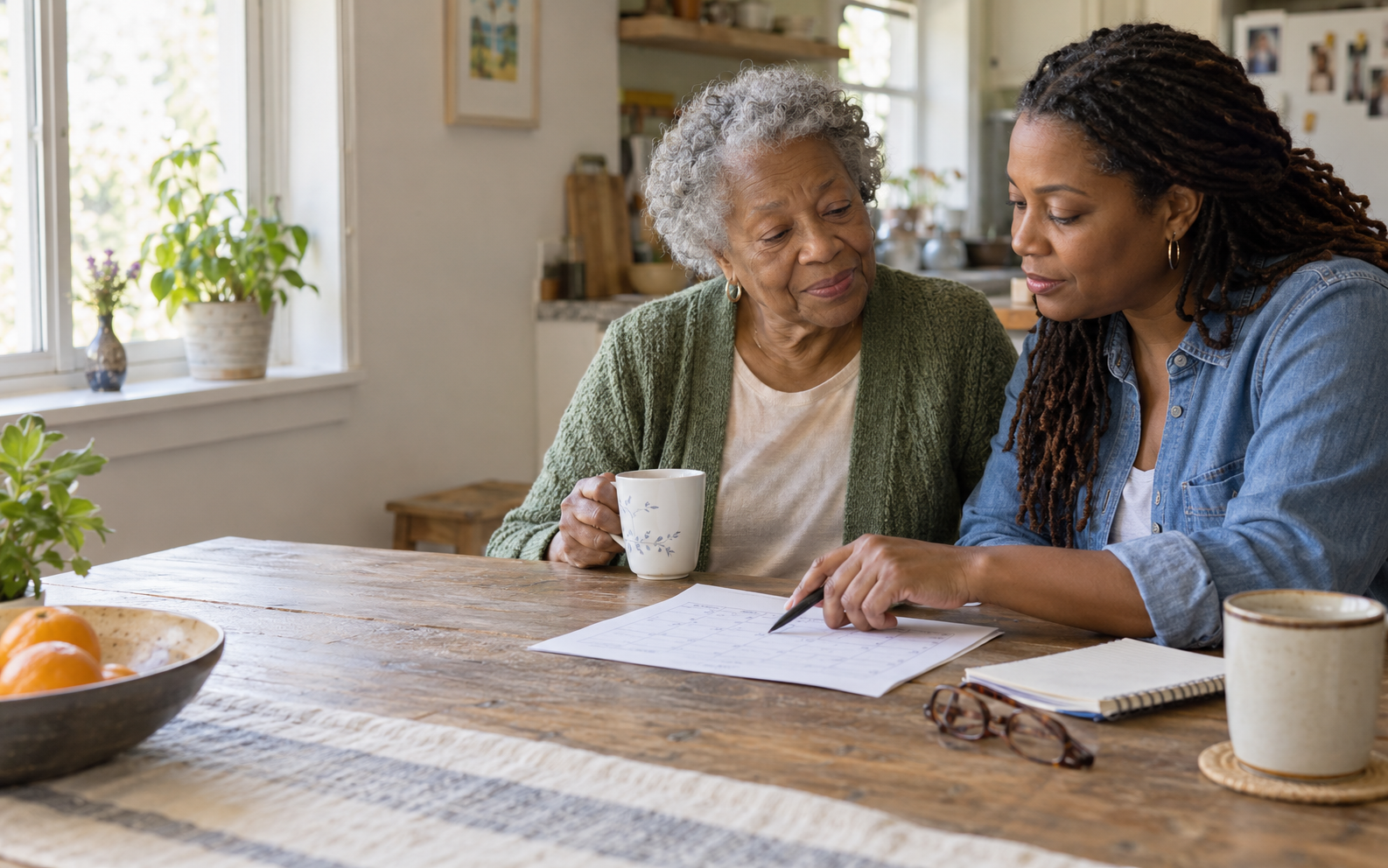
Build the household plan around the clinical plan.
Confirm instructions, follow-up, mobility limits and who owns each clinical question.
Cover meals, errands, safe routines, transportation and the gaps family cannot reliably fill.
Change household support as recovery milestones and clinical instructions change.
Quick answer
A useful first step is to make the problem smaller. In Belle Meade, Brentwood, and Franklin, after a fall, the important question is not only whether the immediate injury was treated; it is whether the conditions that made the week fragile are still present. The goal is to identify the part of daily life that needs support first, then compare the most practical next step.
CDC states that falls threaten older-adult independence and recommends clinical fall-risk discussion plus home-safety measures; a non-medical care page should not diagnose the cause of a fall. Use these figures as context, not as a prediction of what one household needs.
After the immediate medical question
After a fall, the local rehab system, travel pattern and evidence-based fall-prevention boundary all matter:
- Falls clinical boundary. CDC states that falls threaten older-adult independence and recommends clinical fall-risk discussion plus home-safety measures; a non-medical care page should not diagnose the cause of a fall.
- Healthcare access. Very strong post-acute depth: Williamson Health provides inpatient and outpatient rehabilitation in Franklin, and Encompass Health Rehabilitation Hospital of Franklin provides dedicated inpatient rehabilitation with interdisciplinary care and referral intake. The broader Nashville medical ecosystem adds substantial acute-care depth.
- Travel / routing friction. Moderate-high corridor routing friction: Franklin/Brentwood follow the I-65/Franklin Road corridor while Belle Meade sits across the Davidson County line near Hillsboro Pike. Peak Nashville traffic and cross-county assignments can create meaningful caregiver deadhead, so use tight north/south service zones.
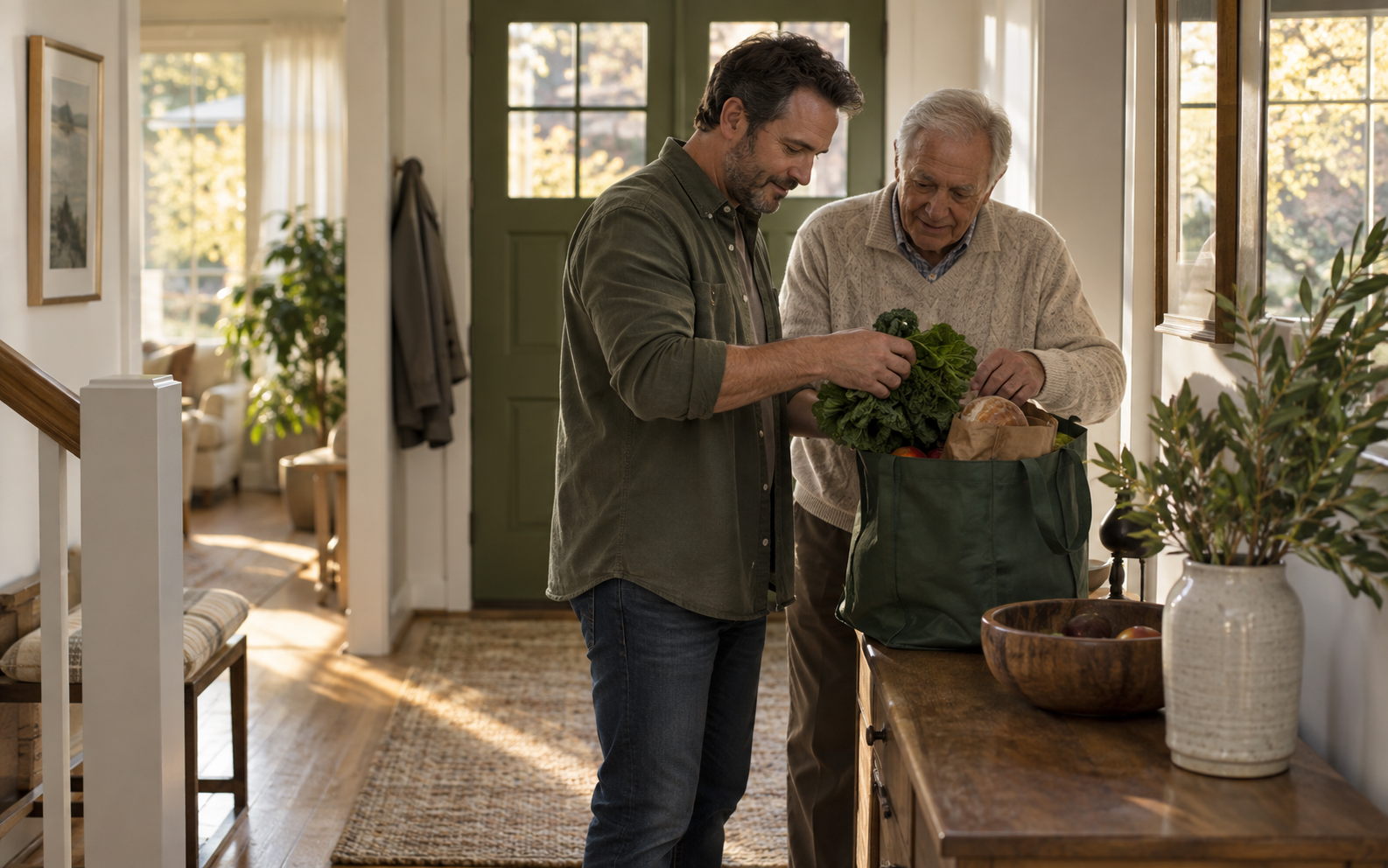
A fall should change the home plan
A fall is a signal to review the whole system even when the injury is minor. The family should understand what clinicians think contributed to the fall, then look at lighting, footwear, clutter, stairs, bathroom setup, mobility aids, medications and the routines that occur when the person is tired or alone.
For Belle Meade, Brentwood, and Franklin, the evidence repeatedly brings the family back to Private-pay aging in place; family coordination. The family should turn that broad market context into a short list of tasks, timing constraints and backup needs that can be tested in real life.
Local rehab and follow-up context
Non-medical caregivers should not diagnose why a person fell or change medications based on fall risk. CDC guidance supports clinical risk assessment and practical home-safety measures; medical causes belong to healthcare professionals.
Very strong post-acute depth: Williamson Health provides inpatient and outpatient rehabilitation in Franklin, and Encompass Health Rehabilitation Hospital of Franklin provides dedicated inpatient rehabilitation with interdisciplinary care and referral intake. The broader Nashville medical ecosystem adds substantial acute-care depth. That local context helps families ask better questions about scheduling, access and the level of support that may be needed.
Temporary help versus a new baseline
Treat the fall as a prompt to improve the system around the older adult.
1 Follow the clinician’s evaluation and recommendations.
2 Review the home for trip hazards, lighting and mobility barriers.
3 Add temporary help around the hardest tasks.
4 Reassess if falls, dizziness, weakness or confusion continue.
The value of the sequence is that it produces something the family can observe. If the plan is not solving the actual gaps, change it rather than adding hours or complexity by default.
Home-safety questions
- Was the cause of the fall medically evaluated?
- What changed in mobility, confidence or the home environment afterward?
- Which prevention steps belong to clinicians and which household routines can the family improve?
Ask for clear answers about scope, scheduling and responsibilities, and verify clinical or licensing questions with the appropriate source.
When clinicians need to be involved
After a fall, revise the plan when balance, confidence, mobility, medication, vision or home-safety recommendations change.
Frequently asked questions
Was the cause of the fall medically evaluated?
Start with the specific problem behind the search for care after a fall and the times it occurs. That prevents the family from buying a broad solution for a narrow problem.
What changed in mobility, confidence or the home environment afterward?
Verify address-specific resources, the provider's written scope, and any eligibility or clinical requirement that affects the plan in Belle Meade, Brentwood, and Franklin.
Which prevention steps belong to clinicians and which household routines can the family improve?
Use clinicians or emergency services for diagnosis, treatment, medication decisions, new medical symptoms or urgent safety concerns. Non-medical support should stay within its appropriate role.
Next step
Before the next conversation, write down the current gaps, when they occur, the people or resources already involved, and the questions that still need an answer. That turns a broad concern into a usable planning brief.
Talk Through Your Care Needs. Service availability, timing, pricing and exact task scope should be confirmed for in Belle Meade, Brentwood, and Franklin.