

In-home senior care can be useful when everyday routines are becoming unreliable but the question is still which tasks, times and backup arrangements need to change. Start by describing the missed routine, not by guessing a package.
Do not buy the maximum amount of help by default.
What part of daily life is actually failing?
When does it happen often enough to need reliable coverage?
What happens when the usual family helper cannot cover it?
Which needs belong to a clinician rather than household support?
What changes the answer in Garden City
- Travel time between home, appointments, errands and the people who can help.
- Which local resources, provider rules or transportation details need direct verification.
- How close reliable family or trusted contacts are when the normal routine breaks.
- Whether the home, schedule and household support can carry the plan week after week.
A practical way to decide
- Map the routine
List the tasks that fail, when they fail and who handles them now. - Check the boundary
Separate household support from needs that require a clinician or emergency response. - Test reliability
Identify the gaps that family can no longer cover consistently. - Decide the next conversation
Use the resulting list to compare the right kind of help.
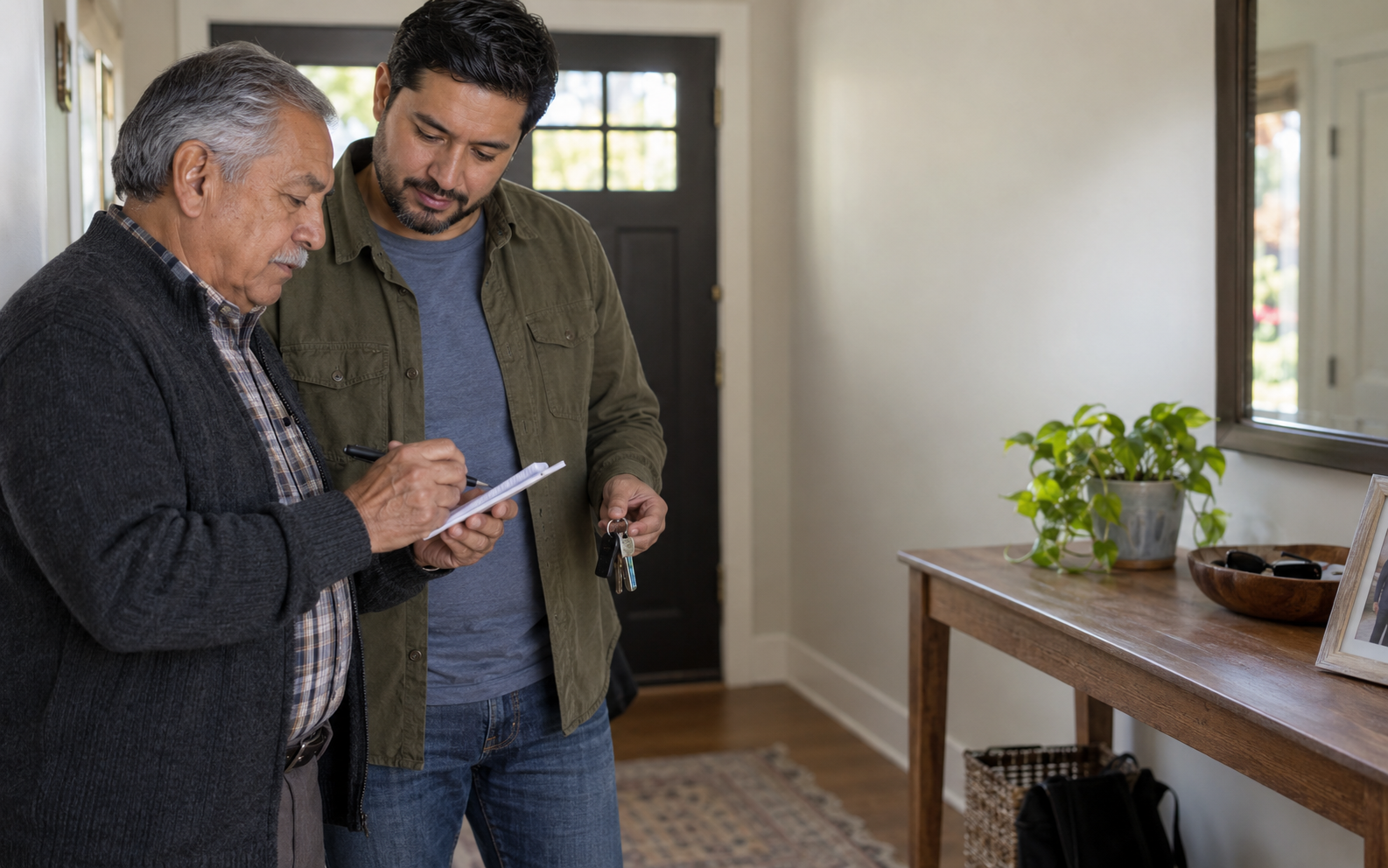
Questions to ask before you decide
- What is the exact routine that needs a reliable answer?
- Who covers it now, and what happens when that person cannot?
- Which facts need direct confirmation in Garden City before the plan is chosen?
- What change would tell us this plan needs to be revisited?
Keep the next step specific
Use the related guides below to organize the adjacent decision. Local research is context, not proof of current Alderwick availability, price, task scope or operating coverage.
Planning in Garden City
Aging in place; post-hospital; companion. Local care planning should begin with the family’s actual week, then account for the geography, recovery pathway and public-resource details that make follow-through realistic.
- Older-adult context: the market fact pack records about 18.7% of residents age 65 or older.
- Travel and routine: High suburban/metro routing friction — Garden City is centrally located but Long Island congestion and appointment travel can still erode utilization without compact caregiver territories.
- Recovery planning: Very strong acute and rehabilitation depth — nearby NYU Langone Hospital—Long Island in Mineola provides broad inpatient and specialty care, with Rusk Rehabilitation services available across Nassau.
- State context to verify: F / Verified
- Household pattern: Affluent Long Island suburban signal — Garden City combines high household income, very high homeownership and strong post-hospital/aging-in-place demand within central Nassau County.
These facts are local planning context. Confirm current eligibility, provider scope, transportation details and public-program terms directly with the original source.