
Build three layers: eyes, action and escalation.
Who can notice a change that a phone call may miss?
Who handles rides, groceries, appointments and home access?
Who gets called when the normal routine breaks?
What happens when the first local helper is unavailable?
Quick answer
The goal is not to buy the maximum amount of help. It is to identify the smallest reliable plan that solves the current gaps. In Elkhorn, Papillion, and Gretna, long-distance caregiving works better when the family builds a local operating system instead of trying to manage every surprise remotely. The goal is to identify the part of daily life that needs support first, then compare the most practical next step.
Low overall seasonal signal: the Omaha growth-suburb thesis is primarily year-round residential. As a cross-check, Elkhorn ZCTA 68022 has 120 seasonal/recreational/occasional-use units out of 13,457 total housing units in ACS 2024 5-year data (about 0.9%). Use these figures as context, not as a prediction of what one household needs.
Long-distance care needs a local operating system
Long-distance planning is shaped by travel patterns, household seasonality and caregiver burden:
- Seasonality / household pattern. Low overall seasonal signal: the Omaha growth-suburb thesis is primarily year-round residential. As a cross-check, Elkhorn ZCTA 68022 has 120 seasonal/recreational/occasional-use units out of 13,457 total housing units in ACS 2024 5-year data (about 0.9%).
- Travel / routing friction. Moderate: CHI Health Midlands is about 1.3 miles from Papillion and Bellevue/rehab options about 5.6 miles away, but the Elkhorn-Papillion-Gretna cluster spans Douglas and Sarpy Counties. Use separate service zones for west Omaha/Elkhorn versus Sarpy County.
- Family logistics. Verified market positioning for Elkhorn / Papillion / Gretna: Aging parents in growth suburbs; post-hospital.
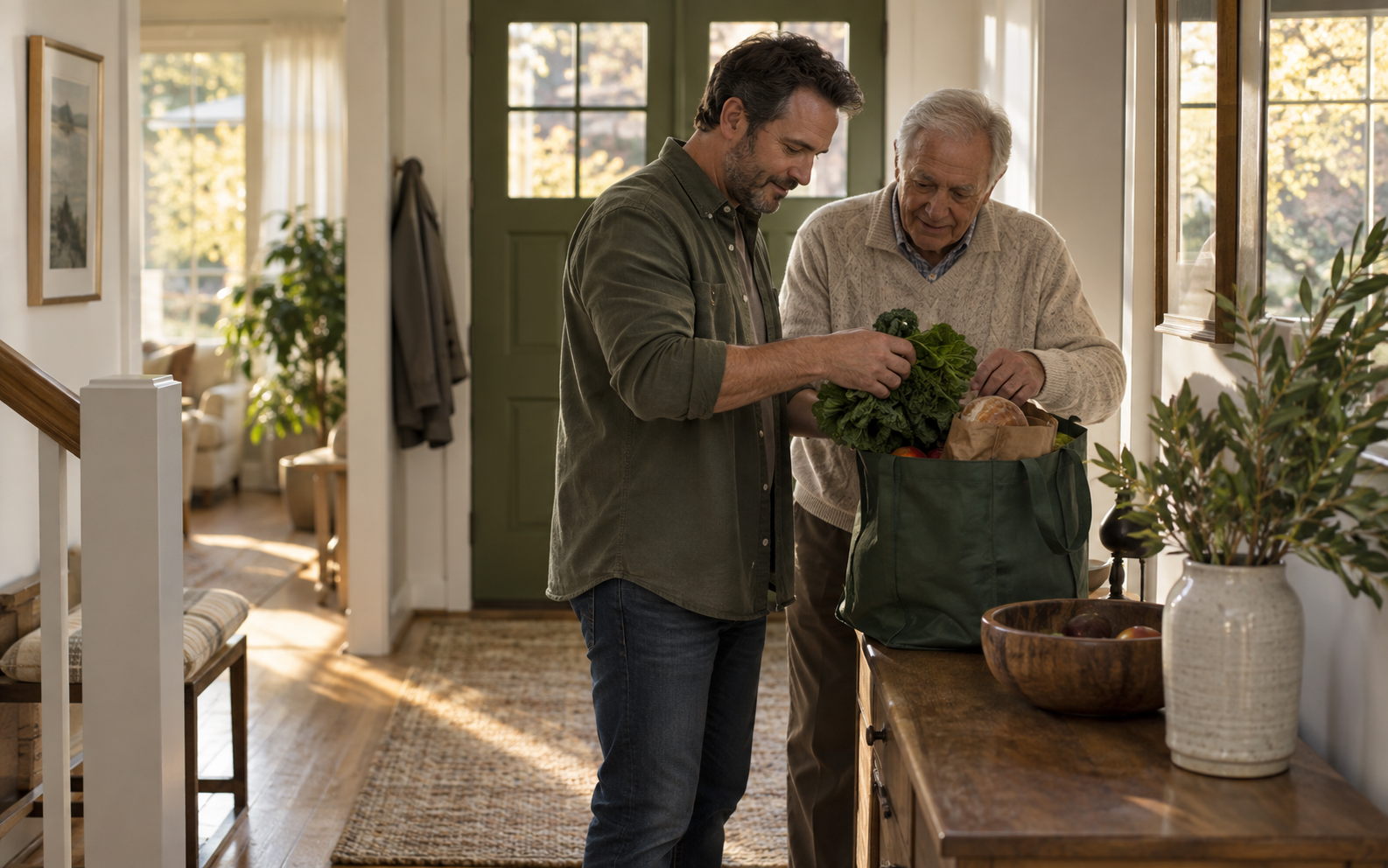
Map the local people and places
Long-distance families need redundancy. One local contact is not enough; build a short list that includes healthcare contacts, a neighbor or friend when appropriate, transportation options, home access information and a backup person who can respond if the usual helper is unavailable.
In Elkhorn, Papillion, and Gretna, the verified market profile points especially to Aging parents in growth suburbs; post-hospital. The family should turn that broad market context into a short list of tasks, timing constraints and backup needs that can be tested in real life.
Travel friction matters
Remote coordination does not replace emergency response or clinical oversight. The family should know who can physically reach the home and which concerns require 911, a clinician, building staff, a neighbor or another local resource.
Low overall seasonal signal: the Omaha growth-suburb thesis is primarily year-round residential. As a cross-check, Elkhorn ZCTA 68022 has 120 seasonal/recreational/occasional-use units out of 13,457 total housing units in ACS 2024 5-year data (about 0.9%). Moderate: CHI Health Midlands is about 1.3 miles from Papillion and Bellevue/rehab options about 5.6 miles away, but the Elkhorn-Papillion-Gretna cluster spans Douglas and Sarpy Counties. Use separate service zones for west Omaha/Elkhorn versus Sarpy County. That local context helps families ask better questions about scheduling, access and the level of support that may be needed.
Create a communication rhythm
Remote care becomes more manageable when responsibility is distributed and information is shared.
1 Name one local point person.
2 Create a shared information system.
3 Plan travel before predictable medical events or seasonal constraints.
4 Define what requires an in-person response.
The value of the sequence is that it produces something the family can observe. If the plan is not solving the actual gaps, change it rather than adding hours or complexity by default.
Decide what needs an in-person check
- Who is physically close enough to respond to an urgent but non-emergency problem?
- Who can attend appointments or inspect the home when needed?
- What information does every family decision-maker need access to?
Ask for clear answers about scope, scheduling and responsibilities, and verify clinical or licensing questions with the appropriate source.
Backup decision-makers
Long-distance coordination needs a reset when the local point person changes, travel becomes harder, the older adult stops driving, or medical follow-up becomes more frequent.
Frequently asked questions
Who is physically close enough to respond to an urgent but non-emergency problem?
Start with the specific problem behind the search for long-distance caregiving and the times it occurs. That prevents the family from buying a broad solution for a narrow problem.
Who can attend appointments or inspect the home when needed?
Verify address-specific resources, the provider's written scope, and any eligibility or clinical requirement that affects the plan in Elkhorn, Papillion, and Gretna.
What information does every family decision-maker need access to?
Use clinicians or emergency services for diagnosis, treatment, medication decisions, new medical symptoms or urgent safety concerns. Non-medical support should stay within its appropriate role.
Next step
Before the next conversation, write down the current gaps, when they occur, the people or resources already involved, and the questions that still need an answer. That turns a broad concern into a usable planning brief.
Talk Through Your Care Needs. Service availability, timing, pricing and exact task scope should be confirmed for in Elkhorn, Papillion, and Gretna.