

Build the household plan around the clinical plan.
Confirm instructions, follow-up, mobility limits and who owns each clinical question.
Cover meals, errands, safe routines, transportation and the gaps family cannot reliably fill.
Change household support as recovery milestones and clinical instructions change.
Quick answer
The clearest plan starts with what is actually happening during a normal week. In Alpharetta and Forsyth County, the transition home after a hospital or rehabilitation stay is where medication lists, follow-up appointments, mobility instructions, meals and ordinary household tasks collide. The goal is to identify the part of daily life that needs support first, then compare the most practical next step.
Very strong referral depth: Northside Hospital Forsyth is a 407-bed hospital with a large physician/employee base, and Northside operates dedicated Forsyth and Alpharetta rehabilitation sites covering orthopedic, neurologic, stroke/head-injury, deconditioning and post-surgical needs. This creates a substantial Cumming-Alpharetta post-acute corridor. Use these figures as context, not as a prediction of what one household needs.
The first 72 hours at home
A discharge-to-home plan should be anchored in the local healthcare system, the skilled/non-medical boundary and follow-up logistics:
- Healthcare access. Very strong referral depth: Northside Hospital Forsyth is a 407-bed hospital with a large physician/employee base, and Northside operates dedicated Forsyth and Alpharetta rehabilitation sites covering orthopedic, neurologic, stroke/head-injury, deconditioning and post-surgical needs. This creates a substantial Cumming-Alpharetta post-acute corridor.
- Skilled home-health boundary. Medicare home-health coverage may include qualifying skilled nursing and therapy, but non-medical household support is a separate category and should not be represented as skilled home health.
- Travel / routing friction. Moderate-high exurban routing friction: Alpharetta/Forsyth is workable as a north-metro territory but GA-400 congestion and the large Cumming/Forsyth footprint can create long caregiver deadhead. Zone Alpharetta/Milton separately from northern Forsyth/Dawson-facing assignments as density grows.
Use the discharge plan as the source of truth
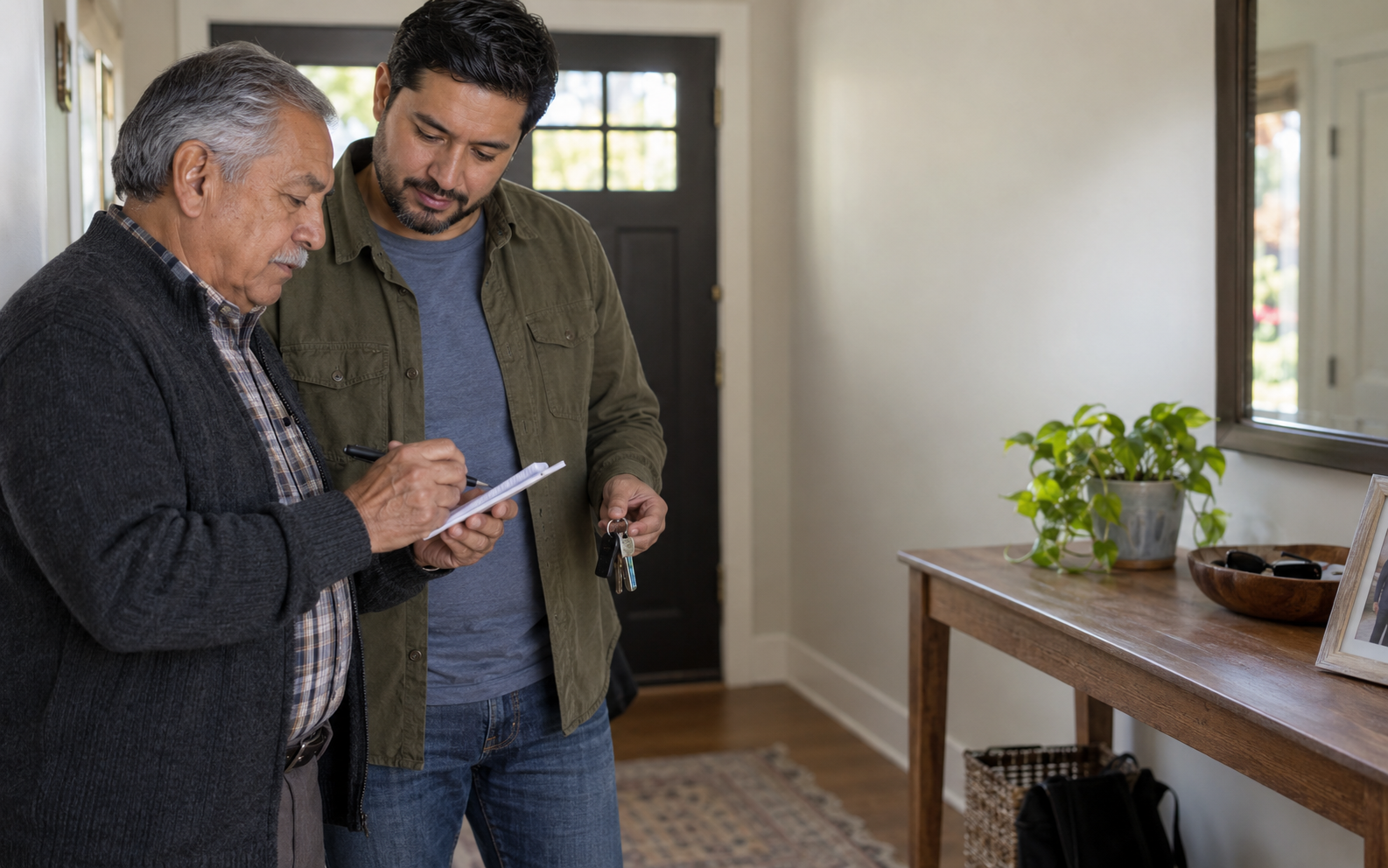
Discharge instructions should become the household's operating plan for the first several days. Put medications, therapy, wound or equipment instructions, follow-up appointments, diet/activity restrictions and warning signs in one place, then assign the non-clinical tasks around that plan.
Local planning in Alpharetta and Forsyth County around Aging parents in suburban growth corridor. The family should turn that broad market context into a short list of tasks, timing constraints and backup needs that can be tested in real life.
Local hospital and rehab context
Medicare home health, outpatient therapy, home-based physician services and non-medical household support are different categories. The discharge team should identify the clinical services; a family can then plan household coverage around them.
Very strong referral depth: Northside Hospital Forsyth is a 407-bed hospital with a large physician/employee base, and Northside operates dedicated Forsyth and Alpharetta rehabilitation sites covering orthopedic, neurologic, stroke/head-injury, deconditioning and post-surgical needs. This creates a substantial Cumming-Alpharetta post-acute corridor. That local context helps families ask better questions about scheduling, access and the level of support that may be needed.
Skilled home health versus household support
The first week home is easier when every task has an owner.
1 Get the discharge instructions in writing.
2 Create one owner for appointments and transportation.
3 Separate skilled home-health/therapy orders from household support.
4 Check the plan again after the first several days at home.
The value of the sequence is that it produces something the family can observe. If the plan is not solving the actual gaps, change it rather than adding hours or complexity by default.
Follow-up logistics
- What did the discharge team say must happen at home?
- Which tasks require home health, therapy or nursing?
- Who owns transportation, meals, follow-up and household support during the first week?
Ask for clear answers about scope, scheduling and responsibilities, and verify clinical or licensing questions with the appropriate source.
Questions before discharge
A post-hospital plan should be revised when therapy, mobility, wound/equipment needs, follow-up frequency or the discharge team's instructions change.
Frequently asked questions
What did the discharge team say must happen at home?
Start with the specific problem behind the search for post-hospital home care and the times it occurs. That prevents the family from buying a broad solution for a narrow problem.
Which tasks require home health, therapy or nursing?
Verify address-specific resources, the provider's written scope, and any eligibility or clinical requirement that affects the plan in Alpharetta and Forsyth County.
Who owns transportation, meals, follow-up and household support during the first week?
Use clinicians or emergency services for diagnosis, treatment, medication decisions, new medical symptoms or urgent safety concerns. Non-medical support should stay within its appropriate role.
Next step
Before the next conversation, write down the current gaps, when they occur, the people or resources already involved, and the questions that still need an answer. That turns a broad concern into a usable planning brief.
Talk Through Your Care Needs. Service availability, timing, pricing and exact task scope should be confirmed for in Alpharetta and Forsyth County.