

Do not buy the maximum amount of help by default.
What part of daily life is actually failing?
When does it happen often enough to need reliable coverage?
What happens when the usual family helper cannot cover it?
Which needs belong to a clinician rather than household support?
Quick answer
The best respite plans are specific. “I need a break” is real, but it becomes actionable when the family identifies which hours are hardest to cover, what the older adult needs during those hours, and what would make the handoff feel normal rather than disruptive.
Use this as a decision tool for Sarasota, Longboat Key and Siesta Key: identify what is happening, see which local factors change the plan, and verify the questions that cannot safely be answered from a website.
Two local facts are worth carrying into the family conversation. Across the broader local market, 459,547 people with 37.5% age 65+, 18.6% age 75+, and 5.1% age 85+. Local planning commonly involves aging in place; long-distance family; post-hospital as recurring family-care themes in Sarasota, Longboat Key and Siesta Key.
The local facts that matter
Before comparing providers, ground the decision in the local healthcare, household and regulatory context. In Sarasota, Longboat Key and Siesta Key, the research points especially to aging in place; long-distance family; post-hospital. The market is best understood as a affluent retirement coastal.
- Older-adult context. Across the broader local market, 459,547 people with 37.5% age 65+, 18.6% age 75+, and 5.1% age 85+.
- Local family pattern. Local planning commonly involves aging in place; long-distance family; post-hospital as recurring family-care themes in Sarasota, Longboat Key and Siesta Key.
- Hospital and rehabilitation context. Exceptional local post-acute depth: Sarasota Memorial's 60-bed hospital-based inpatient rehabilitation unit anchors discharge-to-home demand.
- Scope boundary. A private-pay organization limited to homemaker/companion services may operate under Florida AHCA Homemaker & Companion Services registration, but that registration does not authorize hands-on personal care. If the service model includes bathing, dressing, eating, hygiene, transfers, ambulation or other hands-on ADL assistance, the operator must use an appropriately licensed home health agency or nurse registry model. Personal-care scope: HCS registrants may provide housekeeping, cooking, errands and companionship but may not provide hands-on personal care. Florida defines personal care to include assistance with ADLs such as dressing, bathing, eating, hygiene, transfers, ambulation and permitted medication assistance.
- Local caregiver-support resource. Area Agency on Aging for Southwest Florida: Services: AAASWFL serves Sarasota County and administers Title III-E National Family Caregiver Support Program services for families caring for frail elders, with respite among the support categories available through the aging network.
Local logistics. High coastal/seasonal routing friction: constrained bridges, US-41/I-75 and winter congestion make island/mainland zoning important.
Build the plan in this order
When the situation feels messy, put the questions in this order:
1 Choose the relief window. Decide whether the family needs a few recurring hours, a regular day, coverage for an appointment, or another defined interval.
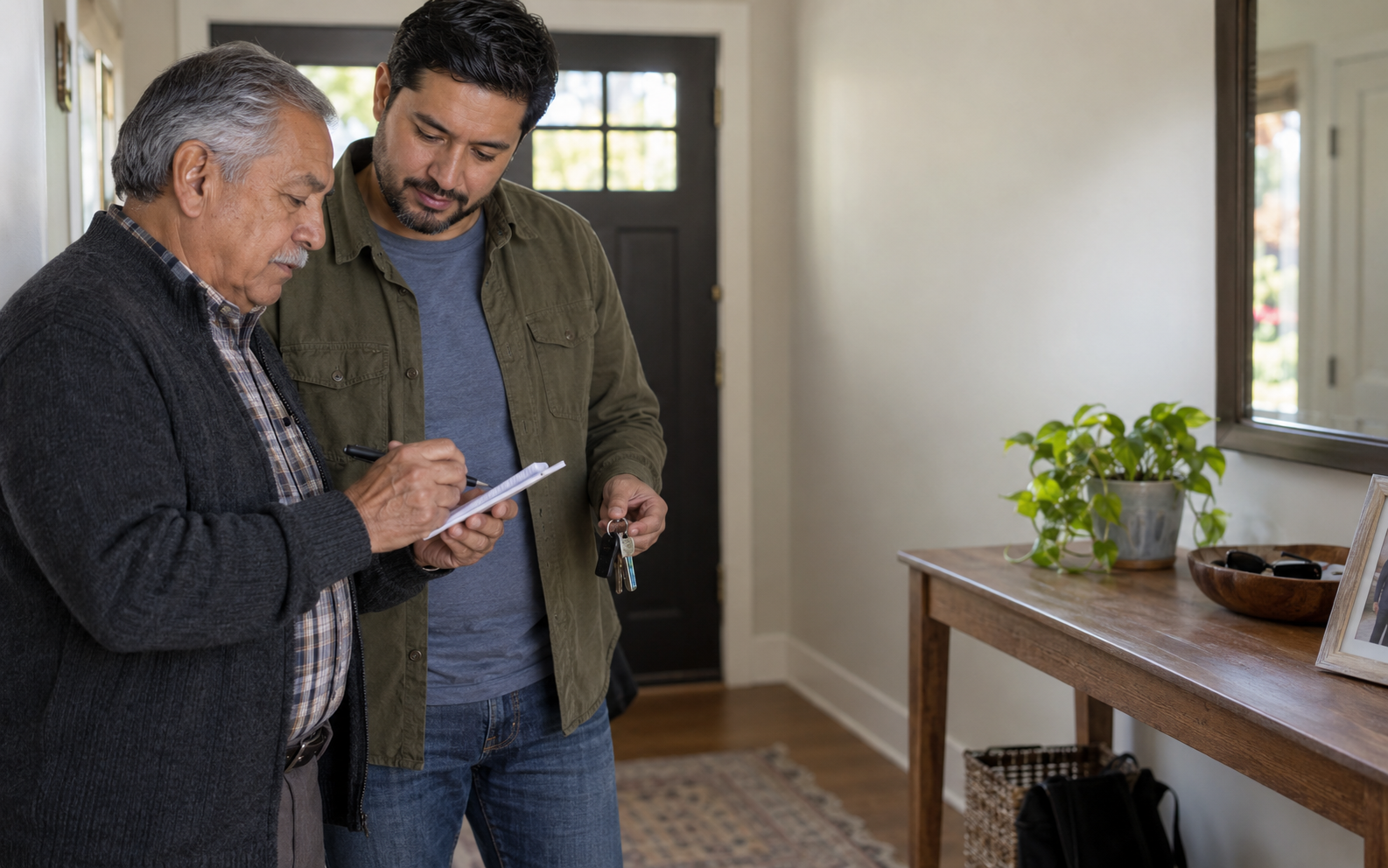
2 Write a simple handoff. Meals, mobility, preferred routines, emergency contacts, communication style and known triggers should fit on a practical one-page handoff.
3 Compare community and in-home options. Adult day programs, caregiver-support programs, family rotation and private in-home support solve different kinds of respite needs.
4 Plan the next break before the first one ends. A recurring break is easier to sustain than waiting until the caregiver is already depleted.
Use one shared weekly note: track meaningful changes, appointments, falls, missed routines and who covered what. That turns respite care into a manageable planning problem instead of a series of emergency texts.
Use respite resources without promising eligibility
Public caregiver-support and respite programs can be part of the family’s plan, but eligibility, funding and current provider capacity should be confirmed directly with the program.
Clear boundaries make the page more useful: family, community, non-medical and clinical roles can be coordinated without being blurred together.
Questions to ask before you commit
Useful questions for the next conversation include:
- What exact hours need coverage?
- What routines must stay consistent during the handoff?
- Are there local caregiver-support or adult-day programs worth comparing?
- What is the emergency plan while the primary family caregiver is away?
The answer should be concrete enough to change the plan. If scope, timing, escalation, eligibility or what happens when needs change is still vague, the family still has an unresolved decision.
Common questions before the next step
Is respite only for dementia caregivers?
No. Family caregivers supporting frailty, mobility limitations, chronic illness or ordinary daily-living needs can also need planned relief.
How should we compare respite options?
Compare the older adult’s needs, the length and frequency of the break, the setting, eligibility, transportation and what tasks the respite option can actually cover.
Does respite have to mean overnight care?
No. Respite can be a few hours, a recurring day, an adult-day program, or another defined period depending on the older adult’s needs and the available options.
Useful next steps
In-Home Senior Care | Dementia Home Care | Long-Distance Caregiving | How Much Care Does My Parent Need?.
Start with the part you can answer now
Avoid making a permanent decision from one stressful week. Use the current facts, cover the highest-consequence gap, and decide when the family will reassess.
Talk Through Your Care Needs