
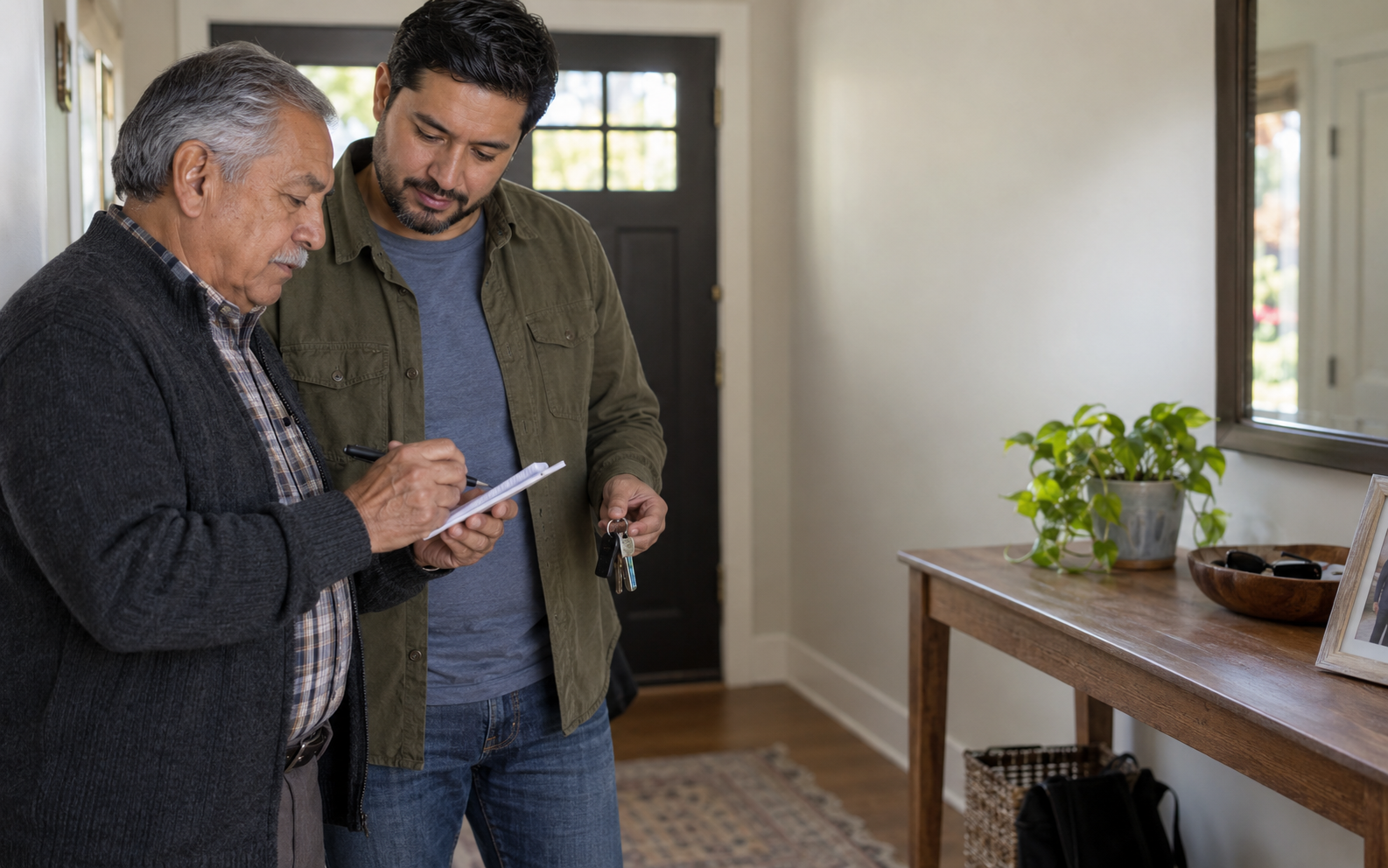
Dementia home-care planning works best when it starts with observable changes in memory, routine, judgment or evening patterns. It should not substitute for clinical evaluation or emergency help.
One local detail to plan around in Pasadena / San Marino: For an older adult staying in a long-held home, review stairs, bathroom access, transportation and who can respond locally before assuming the current routine will continue to work. The family should agree on who notices changes and who has authority to act when the normal routine stops working.
Do not buy the maximum amount of help by default.
What part of daily life is actually failing?
When does it happen often enough to need reliable coverage?
What happens when the usual family helper cannot cover it?
Which needs belong to a clinician rather than household support?
Care Needs Assessment
Get a practical first plan. The tool gives you a result you can use, print or bring into a care-planning conversation.
Use the interactive toolBuild the plan around patterns you can observe
- Record the pattern
Write down what is changing and when it tends to happen. - Reduce friction
Simplify cues, routines, lighting, meals and transitions around the hardest parts of the day. - Plan supervision
Decide who notices when the pattern becomes unsafe or unmanageable. - Set escalation triggers
Identify the changes that require a clinician, emergency help or a different living plan.
Questions that matter when memory is changing
- What memory, judgment or routine changes are happening, and at what times?
- Which supervision gaps are becoming unsafe or exhausting for family?
- Which new symptoms should go to the clinical team rather than being treated as a household-support problem?
Decide what the family needs to notice next
Keep a short record of when confusion, missed routines or unsafe decisions occur. Patterns are more useful than a general sense that memory is getting worse.