

Do not buy the maximum amount of help by default.
What part of daily life is actually failing?
When does it happen often enough to need reliable coverage?
What happens when the usual family helper cannot cover it?
Which needs belong to a clinician rather than household support?
Quick answer
In-home senior care is worth exploring when the older adult still wants to remain at home but ordinary routines are becoming unreliable. In Palo Alto / Los Altos, start with the few moments of the day that are actually breaking down rather than a broad list of services.
What has changed at home?
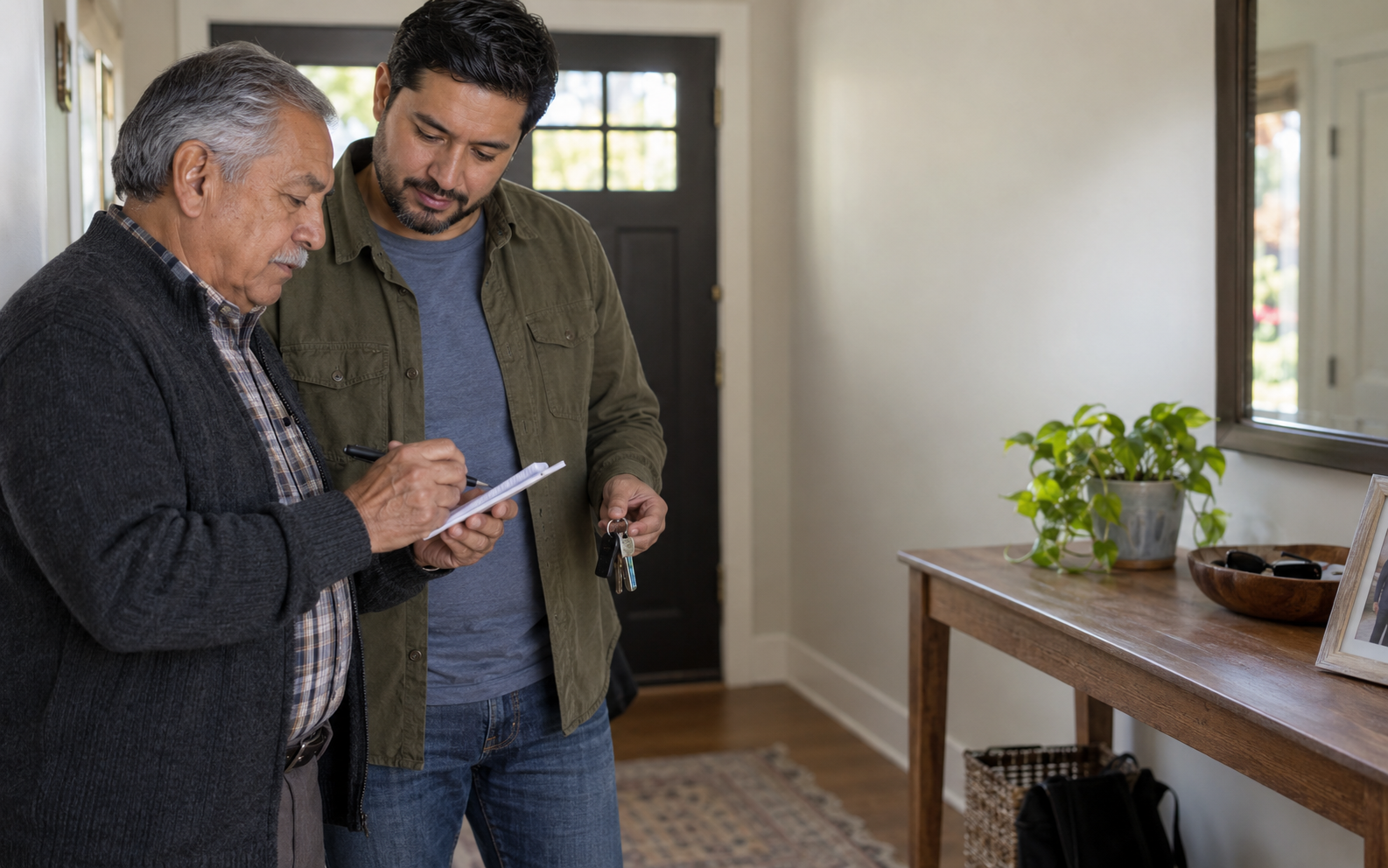
Open with a concrete family moment: a parent is still at home in Palo Alto / Los Altos, but meals, bathing, driving, medication routines, mobility, loneliness, or household tasks are becoming harder and the family needs dependable help without forcing a move. Turn that concern into observable examples: missed meals, isolation, errands that no longer happen, a family caregiver covering every evening, or a routine that now takes far more effort. The goal is to understand the problem before deciding how much outside help could fit.
The local care ecosystem matters
Exceptional referral depth: Stanford Hospital in Palo Alto has multidisciplinary inpatient rehabilitation tied directly to case management and discharge planning; nearby El Camino Mountain View care coordination connects patients to home health, SNF, rehabilitation, hospice and other post-discharge resources.
That local depth gives families alternatives and referral paths; it is not evidence of any relationship with Alderwick Care. The local research records 14.8% of the research geography as age 65+, so aging-at-home decisions are a material local issue rather than an abstract national topic.
Decide whether the problem is non-medical
If the need is household routine, companionship, meals, errands or other appropriate daily support, non-medical care may be relevant. If the need is nursing, therapy, medication administration, clinical monitoring or another regulated task, a different provider or higher level of care may be required.
Use the week, not a sales package
Write down where family coverage is strong and where it fails. A morning gap, two difficult evenings and a weekend transportation problem may call for a very different plan than continuous supervision. High Silicon Valley routing friction: US-101, I-280, El Camino Real, Foothill Expressway and commuter congestion can materially affect caregiver utilization between Palo Alto, Los Altos and adjoining cities. Keep the service area Peninsula/South-Bay zoned rather than metro-wide.
Questions for the first care conversation
- Which routines fail most often?
- What does family already cover?
- What would make remaining at home easier?
- Which tasks clearly require skilled or regulated care?
Claim boundary
Do not turn editorial market research into a claim that Alderwick currently serves the market, has availability, specific prices, hours, credentials, transportation or other unapproved operating capabilities.
Next step
Create a one-week task map. If the uncovered needs appear non-medical, the intended Alderwick action is Talk Through Your Care Needs once the approved form is live.