
Do not buy the maximum amount of help by default.
What part of daily life is actually failing?
When does it happen often enough to need reliable coverage?
What happens when the usual family helper cannot cover it?
Which needs belong to a clinician rather than household support?
Quick answer
Families usually consider overnight support because something specific is happening after bedtime: repeated waking, bathroom assistance, wandering risk, anxiety, a spouse who cannot safely help at night, or the adult child who has stopped sleeping.
Local context can shape the plan in Montecito and Santa Barbara, but the older adult’s actual routine should drive the decision.
Across the broader local market, 443,701 people with 16.6% age 65+, 7.1% age 75+, and 2.4% age 85+. Nighttime waking and sundowning can create distinct care-planning challenges in dementia; educational guidance should support escalation to clinicians rather than imply a non-medical provider treats sleep or behavior disorders.
Local context worth using
Before comparing providers, ground the decision in the local healthcare, household and regulatory context. The local profile for Montecito and Santa Barbara does not decide care for any one household, but it highlights private-pay aging in place; second homes as the planning backdrop.
- Older-adult context. Across the broader local market, 443,701 people with 16.6% age 65+, 7.1% age 75+, and 2.4% age 85+.
- Nighttime planning context. Nighttime waking and sundowning can create distinct care-planning challenges in dementia; educational guidance should support escalation to clinicians rather than imply a non-medical provider treats sleep or behavior disorders.
- Caregiver labor context. Montecito and Santa Barbara has a caregiver labor-market wage benchmark of $16/hour with a labor-pool estimate of 5,580; these figures describe the labor market, not Alderwick pay, openings or staffing capacity.
- Hospital and rehabilitation context. Very strong referral depth: Santa Barbara Cottage Hospital and Cottage Rehabilitation Hospital create a substantial discharge-to-rehab-to-home ecosystem.
- Scope boundary. California’s Home Care Services Consumer Protection Act requires Home Care Organizations serving elderly/disabled clients with non-medical home care/ADL assistance to be licensed; affiliated Home Care Aides must be registered and background-cleared. Personal-care scope: Non-medical home care includes assistance with activities of daily living for elderly and disabled clients; remain outside skilled nursing/medical services unless separately licensed.
Local logistics. Elevated coastal routing friction: US-101, foothill roads and expensive caregiver housing make tight Montecito/Santa Barbara zoning important.
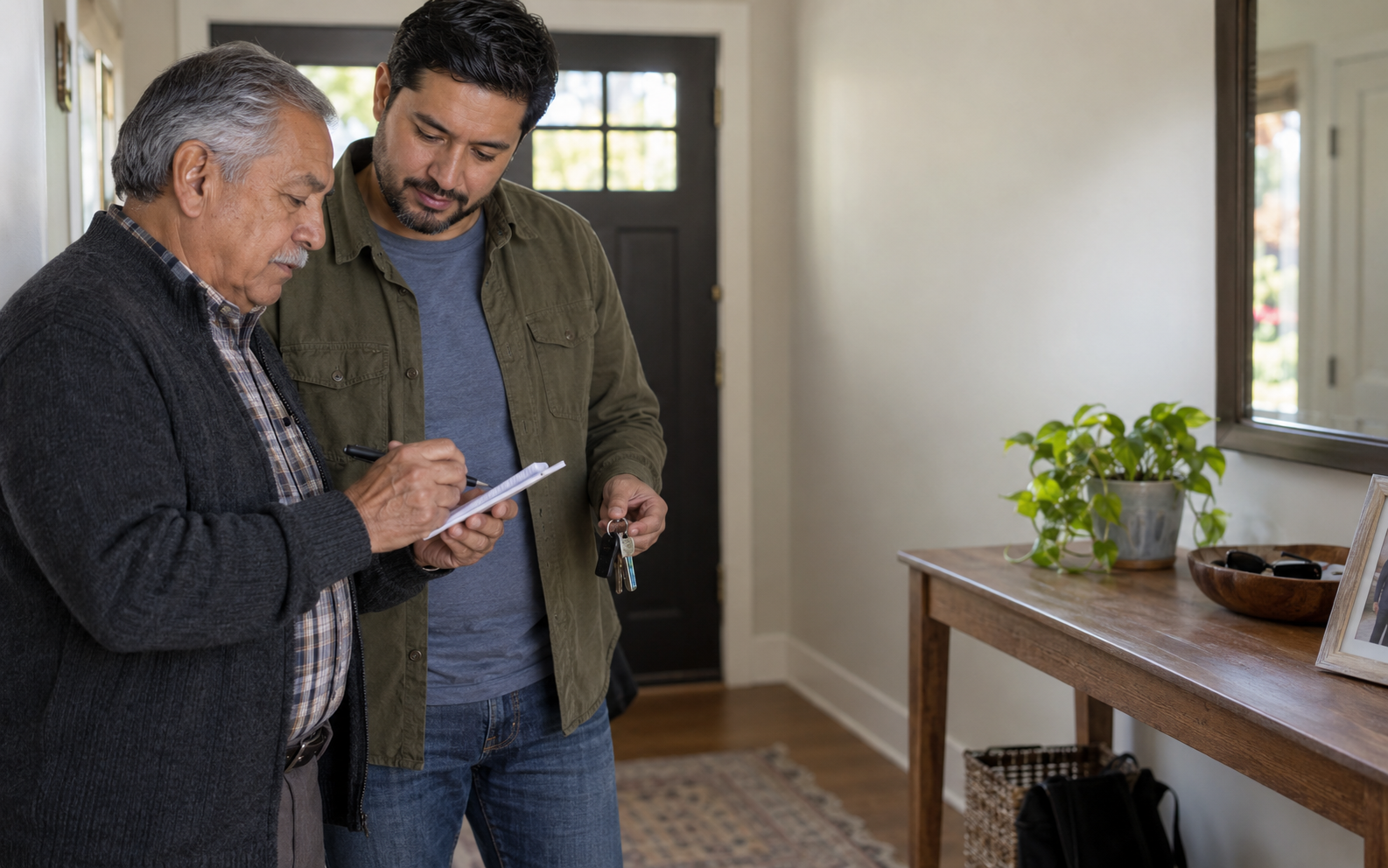
A practical decision path
Instead of trying to solve everything at once, use this sequence:
1 Track what happens overnight. For several nights, note wake times, bathroom needs, wandering, pain, anxiety and how much active help is actually required.
2 Clarify the coverage model. Ask whether the arrangement is awake coverage, a sleep arrangement, rotating care, or another defined model. Do not infer 24-hour availability.
3 Separate medical from non-medical needs. New breathing problems, severe pain, acute confusion or other medical symptoms need clinical evaluation, not simply more overnight non-medical coverage.
4 Check daytime consequences. If nighttime problems are driven by a larger dementia, medication or sleep issue, the family may need a clinician to assess the underlying cause.
Use one shared weekly note: track meaningful changes, appointments, falls, missed routines and who covered what. That turns overnight senior care into a manageable planning problem instead of a series of emergency texts.
Define the nighttime problem before defining the service
California draws a clear line between licensed home-care organizations and skilled medical services. Hands-on task scope, transfers, medication support and dementia-specific claims must be verified before they are described as an Alderwick capability.
This is one of the places where accuracy creates trust. The family should leave knowing which questions still require a clinician, public program or a provider's documented capabilities.
Questions that protect the family from assumptions
Bring these questions to any provider, agency or program you are comparing:
- Is the worker expected to remain awake?
- How are nighttime incidents documented and escalated?
- What tasks are actually allowed overnight?
- How does the overnight plan connect to daytime care?
Before choosing a provider, make sure you can explain the scope, timing, escalation plan, eligibility rules and what happens when needs change.
What families usually want to know next
What if my parent wakes only once or twice?
That pattern may call for a different solution than continuous awake coverage. Track the actual need before choosing a schedule.
Can overnight help manage medical symptoms?
Non-medical overnight support should not be used as a substitute for nursing, home health or medical assessment.
Is overnight care the same as 24-hour care?
No. Overnight coverage is a defined nighttime window. Continuous multi-shift coverage is a separate scheduling and operating model.
Useful next steps
If the family needs to keep working through the decision, the strongest next paths are Dementia Home Care | Respite Care | How Much Care Does My Parent Need? | 24-Hour module if justified.
What to do next
Avoid making a permanent decision from one stressful week. Use the current facts, cover the highest-consequence gap, and decide when the family will reassess.
Talk Through Your Care Needs