
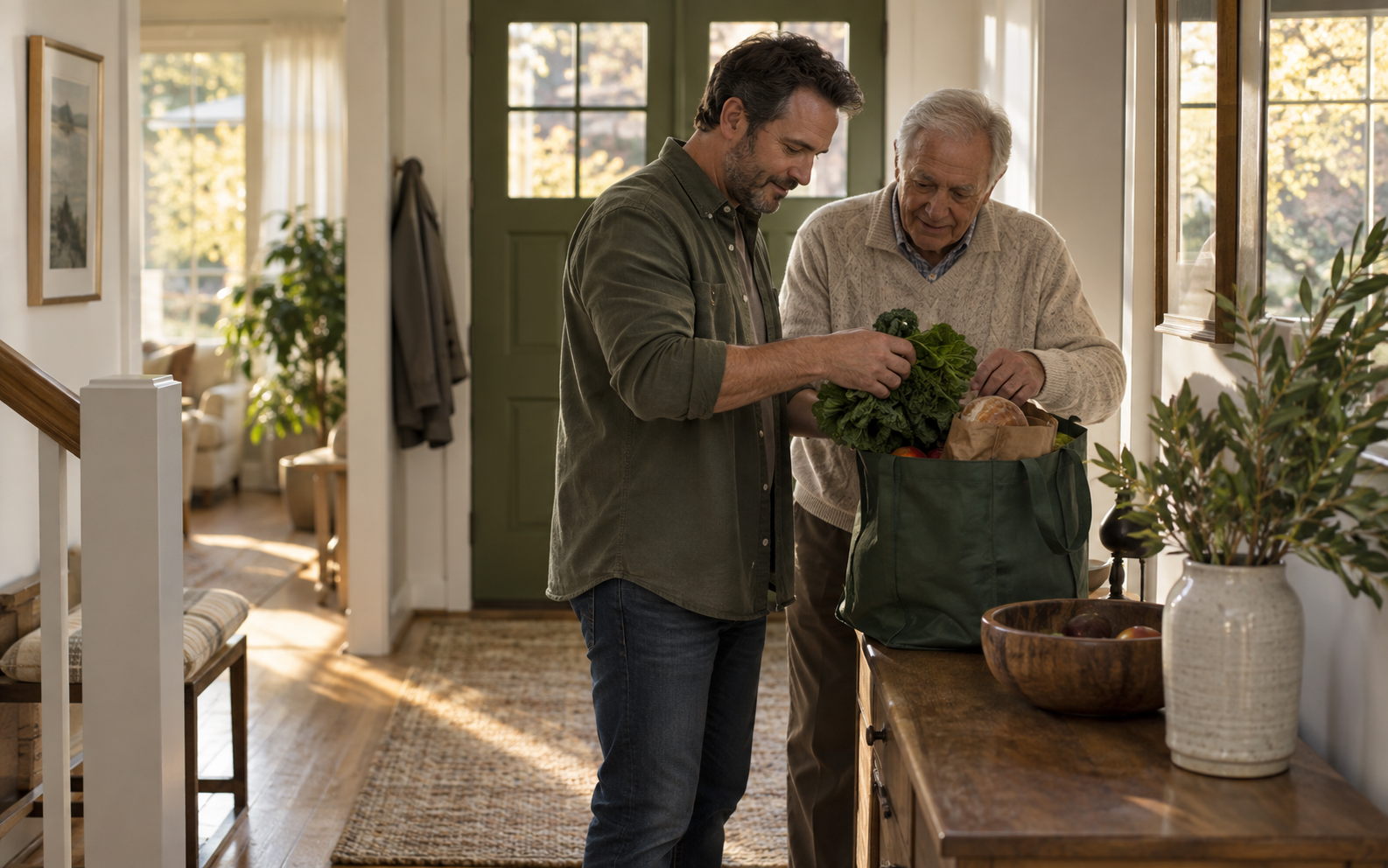
No online checklist can decide whether an older adult is 'safe to live alone.' A more useful question is whether the current home, routines, transportation, health needs and support network are still working together. Families can look at patterns, fix some environmental or logistical problems and involve clinicians when changes require professional evaluation.
START WITH PATTERNS. Track falls, missed meals, trouble with bathing or dressing, getting lost, driving incidents, missed appointments, home-maintenance problems or caregiver exhaustion.
SEPARATE MEDICAL FROM HOUSEHOLD ISSUES. New confusion, sudden functional decline or repeated falls deserve clinical review. Dignity Health YRMC is a major local medical anchor.
LOOK AT THE HOME. Prescott-area homes vary in terrain, lot layout, stairs and distance from services. The home itself may be part of the problem—or part of the solution.
TRANSPORTATION CAN DETERMINE INDEPENDENCE. NACOG supports regional senior transportation where available. A person may need a ride solution rather than broad personal care.
USE COMMUNITY SUPPORTS WHERE THEY FIT. Meals, caregiver support and adult-day resources can reduce isolation or family pressure without replacing independence.
PRESERVE WHAT STILL WORKS. Add help to the failing tasks or dayparts rather than automatically taking over the entire routine.
COMPARE MORE SUPPORT WHEN THE SYSTEM IS FRAGILE. If essential needs repeatedly go uncovered or supervision cannot be provided reliably, compare a different home-care schedule or residential setting.
REVISIT THE PLAN. Living-alone decisions can change after a hospitalization, fall, memory change, driving change or loss of a family caregiver.
Does one fall mean a parent cannot live alone? No. Can transport be the only problem? Yes. Who decides capacity? Qualified professionals. When should another setting be compared? When the home/support system cannot reliably meet needs.
Aging in Place; Fall; Home vs Assisted Living; How Much Care; Transportation.
NACOG; Dignity YRMC; AHCCCS; BLS; Care.com.
Assessment/intake truth; supervision capability; service area; CTA.
No capacity diagnosis, safety guarantee or fear-based sales claim.
Resolve Claims Registry blockers
PROBLEM GUIDE — SITUATION/RELIEF
Independence depends on what happens on an ordinary Tuesday.
Are meals, hygiene and household tasks still happening reliably?
Can the person move around the home and community safely?
Are missed steps creating recurring safety problems?
Who notices quickly when something changes?