
Do not buy the maximum amount of help by default.
What part of daily life is actually failing?
When does it happen often enough to need reliable coverage?
What happens when the usual family helper cannot cover it?
Which needs belong to a clinician rather than household support?
Quick answer
In-home support becomes worth exploring when ordinary routines are taking more coordination than the family can sustainably provide. The first job is to identify the specific gaps rather than shopping for a vague amount of “care.”
For families in Newport Beach and Corona del Mar, local options matter most when they are tied to the older adult’s actual routine.
One way to make this concrete in Newport Beach and Corona del Mar: put the family’s concern next to the local context. Across the broader local market, 3,165,820 people with 16.3% age 65+, 6.7% age 75+, and 2.1% age 85+. Median household income is $116,289, median home value is $962,600, and homeownership is 56.4%. Those figures help frame private-pay and aging-in-place decisions, but they do not tell us what any one family can afford.
What changes the decision locally
Local conditions do not decide care for a family, but they do change the practical options worth comparing. In Newport Beach and Corona del Mar, the strongest local signals center on private-pay senior care; companion; overnight. Use those signals to ask better questions, not to predict what one older adult needs.
- Older-adult context. Across the broader local market, 3,165,820 people with 16.3% age 65+, 6.7% age 75+, and 2.1% age 85+.
- Housing and household context. Median household income is $116,289, median home value is $962,600, and homeownership is 56.4%. Those figures help frame private-pay and aging-in-place decisions, but they do not tell us what any one family can afford.
- Local family pattern. Local planning commonly involves private-pay senior care; companion; overnight as recurring family-care themes in Newport Beach and Corona del Mar.
- Hospital and rehabilitation context. Very strong Southern California post-acute depth: Los Angeles regional rehabilitation evidence is used as the parent-market proxy; Orange County discharge sources should be localized in page briefs.
- Scope boundary. California’s Home Care Services Consumer Protection Act requires Home Care Organizations serving elderly/disabled clients with non-medical home care/ADL assistance to be licensed; affiliated Home Care Aides must be registered and background-cleared. Personal-care scope: Non-medical home care includes assistance with activities of daily living for elderly and disabled clients; remain outside skilled nursing/medical services unless separately licensed.
Local logistics. High coastal routing friction: PCH, CA-73/55 and dense beach traffic make tight Newport/CDM caregiver zones essential.
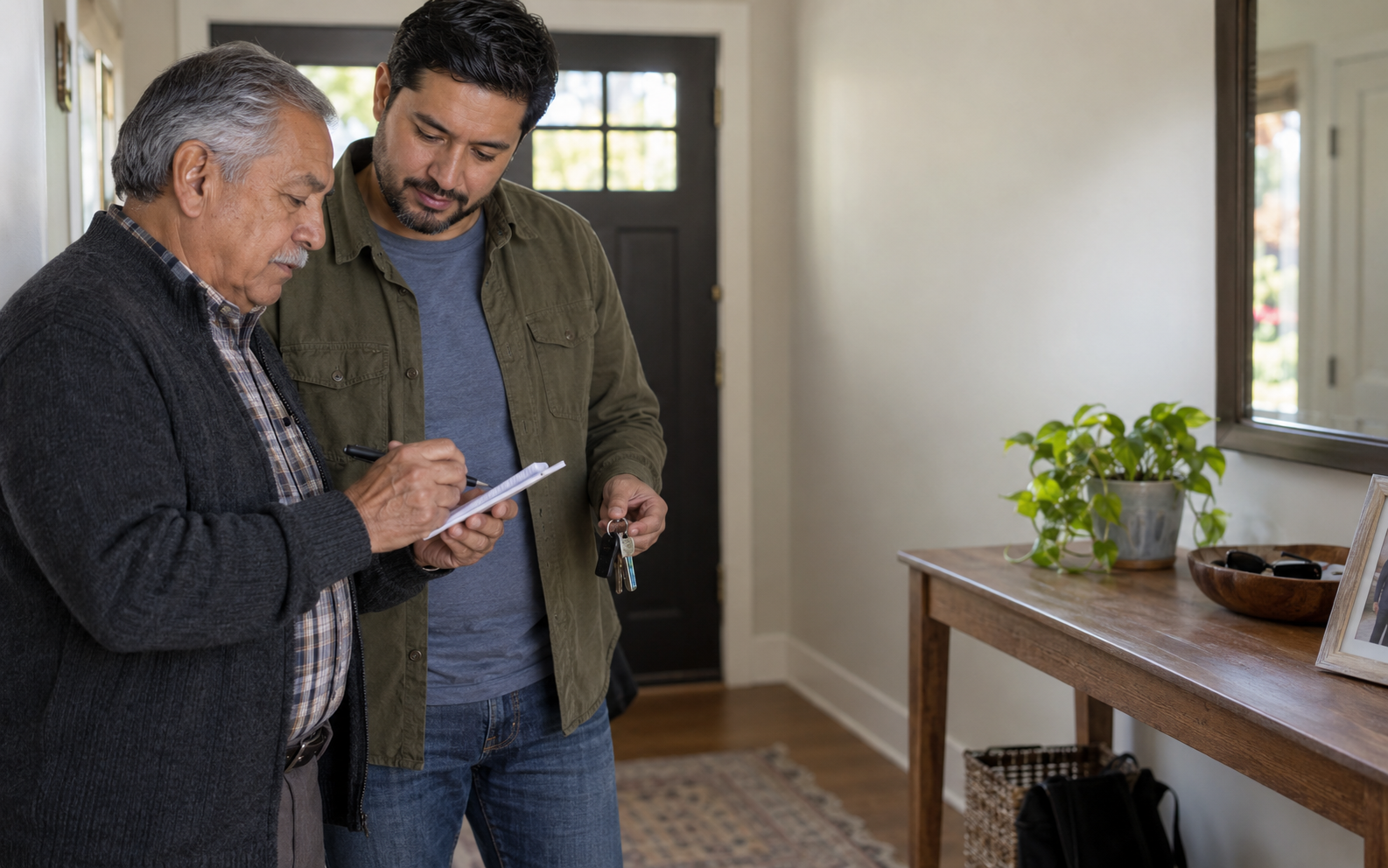
A four-step way to plan
A useful first-pass framework looks like this:
1 Start with the week, not a service menu. Write down the moments that currently require family rescue: mornings, meals, bathing or dressing routines, appointments, evenings, medication organization, housekeeping, or simply being alone too long.
2 Separate non-medical help from clinical care. A home-care conversation should not replace a doctor, nurse, therapist, home-health agency, or emergency plan. If the need is skilled or clinical, route it to the appropriate licensed provider.
3 Choose the smallest useful starting schedule. A good first schedule covers the hardest recurring windows. It can be expanded later if the real pattern shows that more support is needed.
4 Build a review point. After the first week or two, look at what actually improved and what remained difficult. That is more useful than guessing at a permanent schedule on day one.
Test the plan against a hard day: ask what would happen if the primary family helper were unavailable for 48 hours. The answer often reveals which part of in-home senior care needs to be solved first.
Know what kind of help you are looking for
Use this page as a planning guide. Confirm a provider’s service area, availability, pricing, staffing, credentials and task scope directly before making a care decision.
Treat the scope line as part of the planning framework, not legal fine print. It prevents the family from expecting one provider to solve problems that belong to different systems.
What a useful provider conversation should cover
Before choosing a provider or program, ask:
- Which daily routines are the hardest right now?
- What does the family currently cover, and which parts are no longer sustainable?
- What tasks would require a different license or clinical provider?
- How will the plan be adjusted if needs change?
Before choosing a provider, make sure you can explain the scope, timing, escalation plan, eligibility rules and what happens when needs change.
A few questions worth answering early
Is in-home senior care the same as home health?
No. Non-medical support and skilled home health are different categories. Clinical nursing, therapy and medical treatment belong with appropriately licensed healthcare providers.
How do we know if it is time to consider in-home care?
Look for recurring gaps rather than a single bad day: missed meals, unsafe routines, repeated family call-outs, difficulty getting to appointments, or growing strain on the person who has been compensating.
Should we start with as many hours as possible?
Usually the better first move is to cover the highest-friction windows and review the pattern. A larger schedule only makes sense when the actual needs support it.
Useful next steps
The next useful pages are Senior Care Guide | Cost of Home Care | How Much Care Does My Parent Need? | Aging in Place. Link only where the reader’s next question genuinely matches the destination.
Make the next move concrete
The family does not need a perfect care plan before it can make progress. It needs a clear first decision, truthful boundaries and a way to revisit the plan as needs change.
Talk Through Your Care Needs