
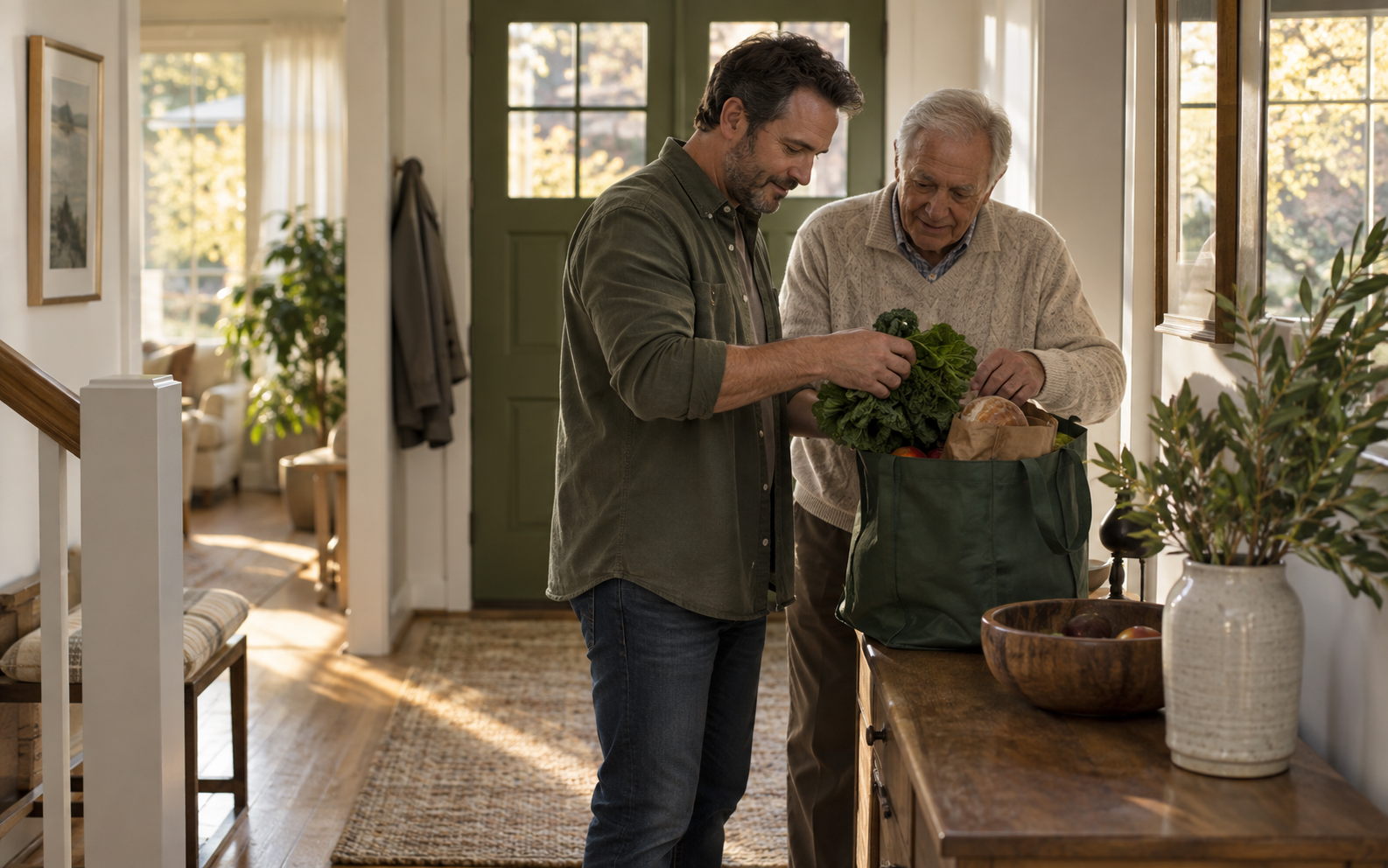
Build the household plan around the clinical plan.
Confirm instructions, follow-up, mobility limits and who owns each clinical question.
Cover meals, errands, safe routines, transportation and the gaps family cannot reliably fill.
Change household support as recovery milestones and clinical instructions change.
Quick answer
The most useful post-stroke support plan begins with what the rehabilitation team says the person can safely do today, not what they could do before the stroke or what the family hopes will be possible next month.
Start with the specific problem the family is trying to solve in Beverly Hills and Bel Air, then compare the smallest practical next step.
Very strong Los Angeles referral depth: California Rehabilitation Institute, Cedars-Sinai and UCLA support a deep hospital-to-rehab-to-home ecosystem. Across the broader local market, 9,808,667 people with 15.2% age 65+, 6.1% age 75+, and 1.9% age 85+.
What changes the plan locally
The local research changes how a family should think about timing, alternatives and logistics. For Beverly Hills and Bel Air, families often have to balance discreet private-duty care; household staff coordination.
- Hospital and rehabilitation context. Very strong Los Angeles referral depth: California Rehabilitation Institute, Cedars-Sinai and UCLA support a deep hospital-to-rehab-to-home ecosystem.
- Older-adult context. Across the broader local market, 9,808,667 people with 15.2% age 65+, 6.1% age 75+, and 1.9% age 85+.
- Local logistics. Very high urban routing friction: canyon roads, Westside congestion and limited parking make dedicated premium-core caregiver zones important.
- Caregiver labor context. Beverly Hills and Bel Air has a caregiver labor-market wage benchmark of $17/hour with a labor-pool estimate of 385,530; these figures describe the labor market, not Alderwick pay, openings or staffing capacity.
- Stroke recovery context. American Stroke Association provides discharge, rehabilitation, and living-at-home resources and emphasizes that the healthcare team helps determine whether returning home is appropriate after stroke.
Local logistics. Very high urban routing friction: canyon roads, Westside congestion and limited parking make dedicated premium-core caregiver zones important.

Turn the concern into a workable plan
A practical way to work through the decision is:
1 Translate the rehab plan into the home. List mobility, communication, diet, equipment and supervision recommendations in plain language for everyone helping.
2 Protect therapy and follow-up routines. Transportation, appointment preparation and a predictable daily schedule can make it easier to follow the clinical plan.
3 Plan for communication differences. Allow extra time, use the strategies recommended by speech/rehab professionals and avoid treating slower communication as lack of understanding.
4 Know the emergency signs. Possible recurrent stroke symptoms require emergency action. Non-medical support is not a substitute for calling emergency services.
Make the concern observable: for seven days, note the time, task and consequence each time someone has to step in. That record is a better starting point for home care after stroke than a general feeling that “more help” is needed.
Let the stroke team define the clinical plan
California draws a clear line between licensed home-care organizations and skilled medical services. Hands-on task scope, transfers, medication support and dementia-specific claims must be verified before they are described as an Alderwick capability.
A credible plan names what is outside scope as clearly as what is inside it. That is especially important when the need changes quickly.
Questions worth asking before you choose a provider
These questions usually reveal more than a generic service list:
- What can the person safely do without assistance today?
- What did PT, OT or speech therapy recommend?
- Are there swallowing, communication or cognitive precautions?
- What symptoms require 911 or immediate clinical contact?
Before choosing a provider, make sure you can explain the scope, timing, escalation plan, eligibility rules and what happens when needs change.
Questions that often come up
Can non-medical home care provide stroke rehabilitation?
No. Rehabilitation is delivered by licensed clinical professionals. Non-medical support may help with daily routines around that plan within scope.
Why can fatigue be such a big issue after stroke?
Post-stroke fatigue can change how much a person can safely manage in a day. The clinical team should guide activity and recovery expectations.
What should family members document?
Changes in function, falls, missed appointments, new symptoms and questions for the rehab team can be useful to track.
Useful next steps
Useful next steps include Post-Hospital Home Care | Senior Transportation | How Much Care Does My Parent Need?.
Start with one workable next step
The next step should reduce uncertainty, not add another layer of pressure. Write down what is changing, what the family is already covering, and which question still does not have a workable answer.
Talk Through Your Care Needs