Skip to content
Alderwick CareClearer decisions. Practical help at home.
Dementia planning · Atherton / Menlo Park

Dementia Home Care in Atherton / Menlo Park

Understand the everyday gap this kind of support may solve, what matters locally and which questions are worth answering before you choose help.

Dementia Home Care in Atherton / Menlo Park
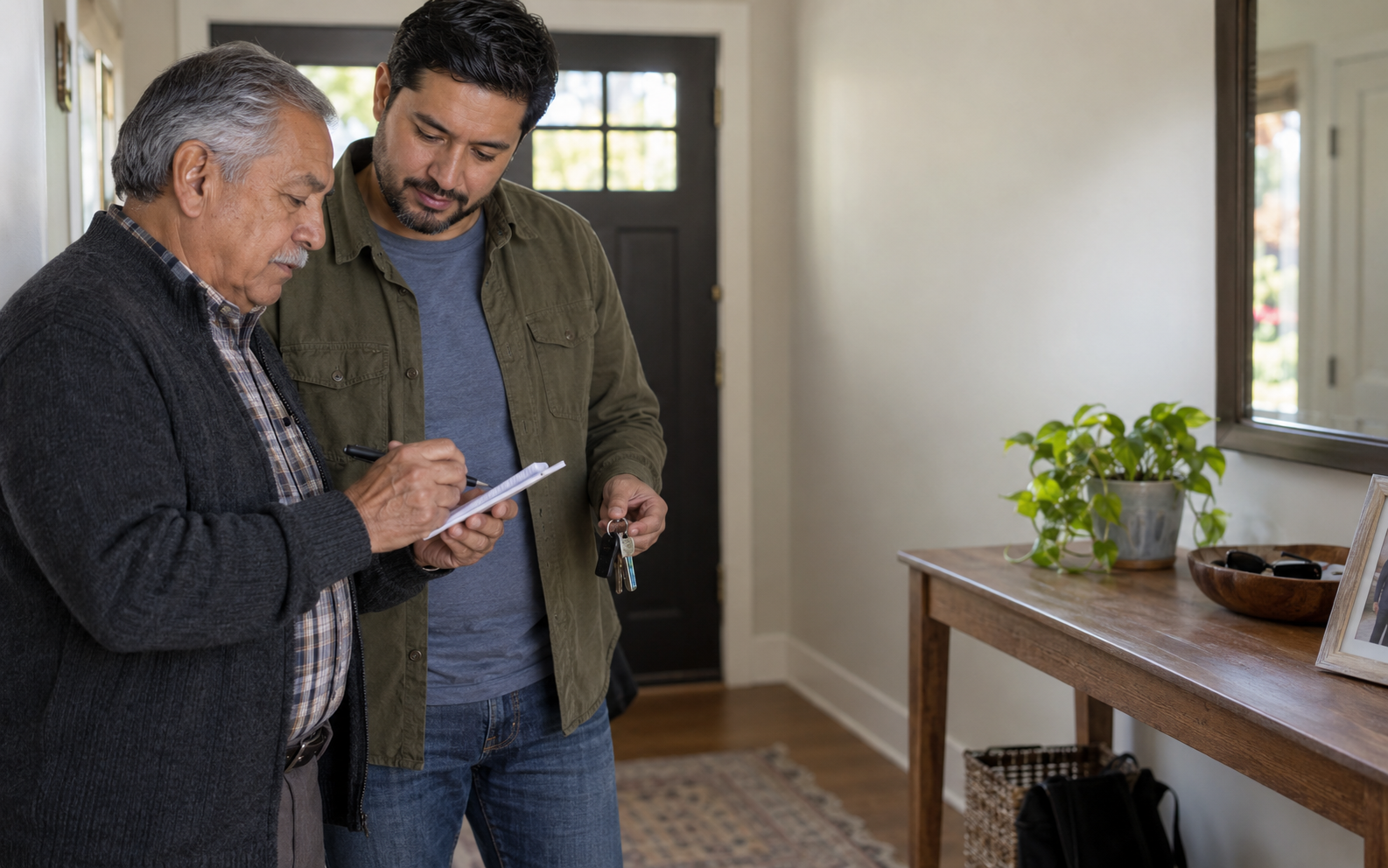
Image may feature models; not an actual Alderwick client or caregiver.
Quick answer

Dementia home-care planning works best when it starts with observable changes in memory, routine, judgment or evening patterns. It should not substitute for clinical evaluation or emergency help.

One local point to plan around in Atherton / Menlo Park: The family should agree on who notices changes and who has authority to act when the normal routine stops working.

Build the plan around patterns you can observe

  1. Record the pattern
    Write down what is changing and when it tends to happen.
  2. Reduce friction
    Simplify cues, routines, lighting, meals and transitions around the hardest parts of the day.
  3. Plan supervision
    Decide who notices when the pattern becomes unsafe or unmanageable.
  4. Set escalation triggers
    Identify the changes that require a clinician, emergency help or a different living plan.

Questions that matter when memory is changing

  • What memory, judgment or routine changes are happening, and at what times?
  • Which supervision gaps are becoming unsafe or exhausting for family?
  • Which new symptoms should go to the clinical team rather than being treated as a household-support problem?

Decide what the family needs to notice next

Keep a short record of when confusion, missed routines or unsafe decisions occur. Patterns are more useful than a general sense that memory is getting worse.

Local planning context

How Atherton / Menlo Park can change the dementia home care decision

For dementia planning in Atherton / Menlo Park, familiar routines matter, but so do supervision, caregiver backup and access to clinical evaluation when symptoms change.

Nearby healthcare context

Menlo Medical Clinic operates in Menlo Park; Stanford Health Care provides inpatient rehabilitation with PT/OT/speech services and discharge planning support; Stanford’s current SNF guidance identifies Atherton Park Post Acute in Menlo Park and The Sequoias Portola Valley Health Center among its Provider Care Network facilities for rehabilitation and follow-up transitions.

Use local clinicians for diagnosis and treatment; household support should reinforce routines and supervision rather than substitute for evaluation.

Travel and timing

Atherton/Menlo Park is compact but US-101, I-280, El Camino Real and cross-Peninsula peak traffic raise travel time for recurring help.

When memory changes are worse at certain times of day, travel reliability matters because the hardest period may not be flexible.

Questions to take into the next conversation

  • What memory, judgment or routine changes are happening, and at what times?
  • Which supervision gaps are becoming unsafe or exhausting for family?
  • Which new symptoms should go to the clinical team rather than being treated as a household-support problem?
Talk it through

Want help using what you worked out?

Bring the plan, checklist or questions you have so far. We can start from there instead of asking you to begin again.

Talk Through Your Care Needs