

Own the routine/connection intent: show which gaps community programs or transportation may solve and where paid companionship might be discussed, without drifting into hands-on personal care.
Do not buy the maximum amount of help by default.
What part of daily life is actually failing?
When does it happen often enough to need reliable coverage?
What happens when the usual family helper cannot cover it?
Which needs belong to a clinician rather than household support?
Start with the part of the week that is getting harder
A useful care plan begins with the older adult’s actual routine. Write down where help is already coming from family, where tasks are being missed, and which moments create the most stress or risk. That makes it easier to decide whether a small amount of support could solve the immediate problem or whether the family needs a different level of care.
What matters locally
Senior routine / social anchors. Scottsdale Senior Services operates Granite Reef and Via Linda senior centers with meals, recreation, fitness, discussion groups and social services, giving the page concrete local routine anchors beyond generic companionship.
Meal / social programming. Scottsdale's senior centers currently offer congregate lunch programs; Via Linda meals run Tuesday-Thursday with advance registration and Granite Reef meals run Monday-Friday with advance registration.
Transportation / independence. CAB Connection is a Scottsdale senior taxi-voucher program for residents age 65+; Scottsdale also lists RideChoice and ADA Paratransit for eligible riders. These resources can solve some ride problems separately from companionship.
Senior-heavy local context. Paradise Valley is especially senior-heavy: 32.7% of residents are 65+ in current Census QuickFacts; Scottsdale is 26.4% 65+. Use this only as context for aging-in-place planning, not as proof of loneliness or demand.
These local details matter because care has to work in Scottsdale / Paradise Valley as it actually is, not in a generic version of the community. Use them to test whether a proposed schedule fits appointments, travel, family availability and the older adult’s normal routines.
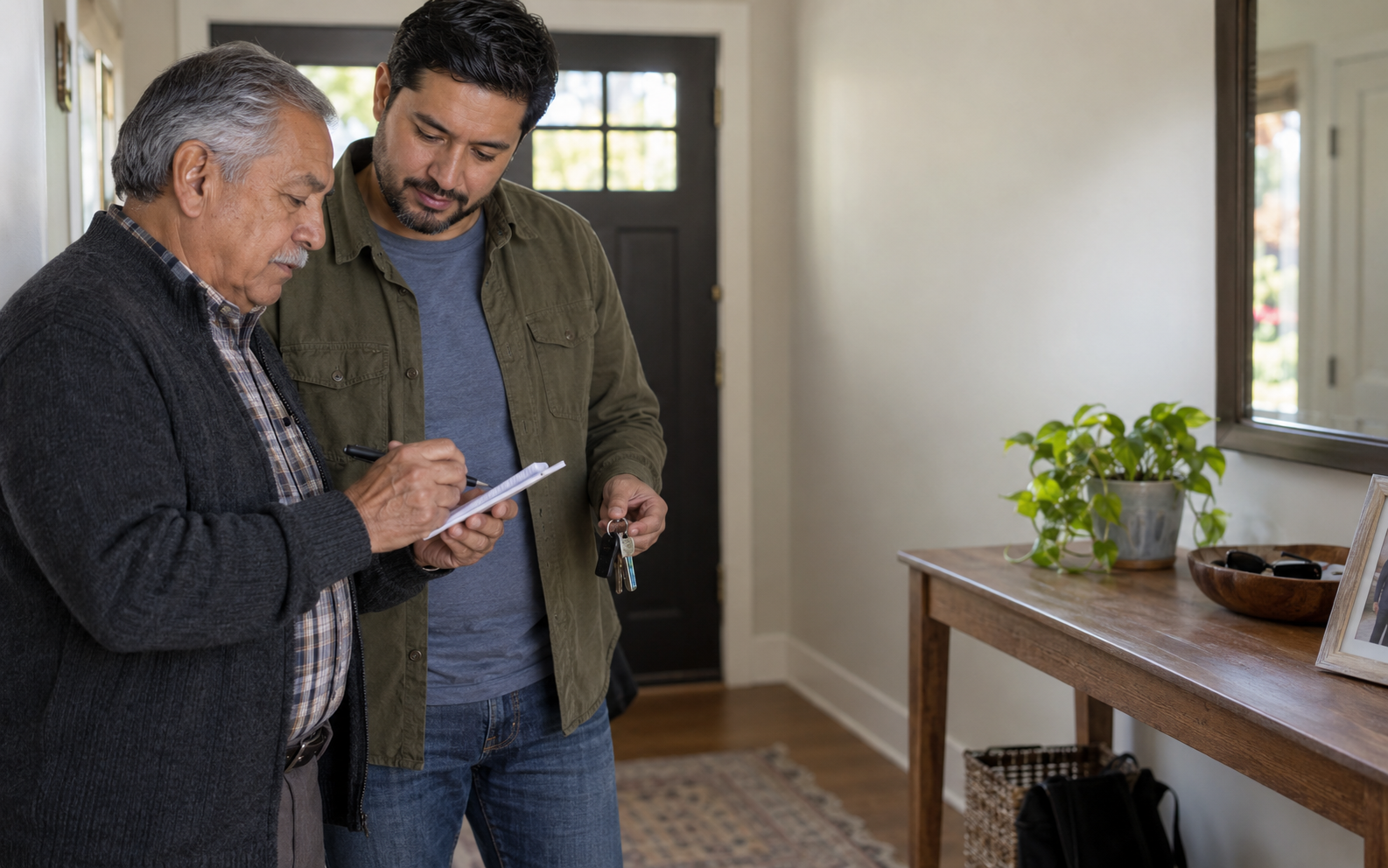
Build a plan around the person, not a package of hours
Start with the smallest schedule that reliably covers the difficult parts of the week. Then decide what should stay with family, what can be handled through non-medical support, and what belongs with a nurse, therapist, physician or other clinical professional.
Know where non-medical support ends
Do not imply bathing, toileting, transfers, medication, supervision, transportation or errands are included in Alderwick companion care until the written company scope is approved.
Put cost information in context
$26.43/hr may be used only as a September 2026 Care.com marketplace starting-rate benchmark, a market benchmark.
Published benchmarks can help with planning, but they are not a quote. Confirm actual rates, minimums and policies directly with any provider you are considering.
Questions worth asking before you choose a provider
Ask what tasks are actually included, how schedules are built, what happens when needs change, how caregiver matching works, what the backup plan is for a call-out, and which requests require clinical care or another resource.
Use local resources as part of the plan
Trust from neutral alternatives, non-stereotyping language and explicit task boundaries.
Start with one workable next step
Choose the two or three moments this week when outside help would make the clearest difference. That gives the family something concrete to discuss without pretending every future care decision has to be made today.
Conceptual CTA: 'Map the weekly routine gaps.' Activate a real inquiry CTA only after company scope, service area and destination are approved.
A practical next step
If companionship, routine and social connection seem like the right starting point, begin with the times of day when your parent is most isolated or needs the most structure. Talk Through Your Care Needs when you are ready to organize those needs into a clearer care conversation.