
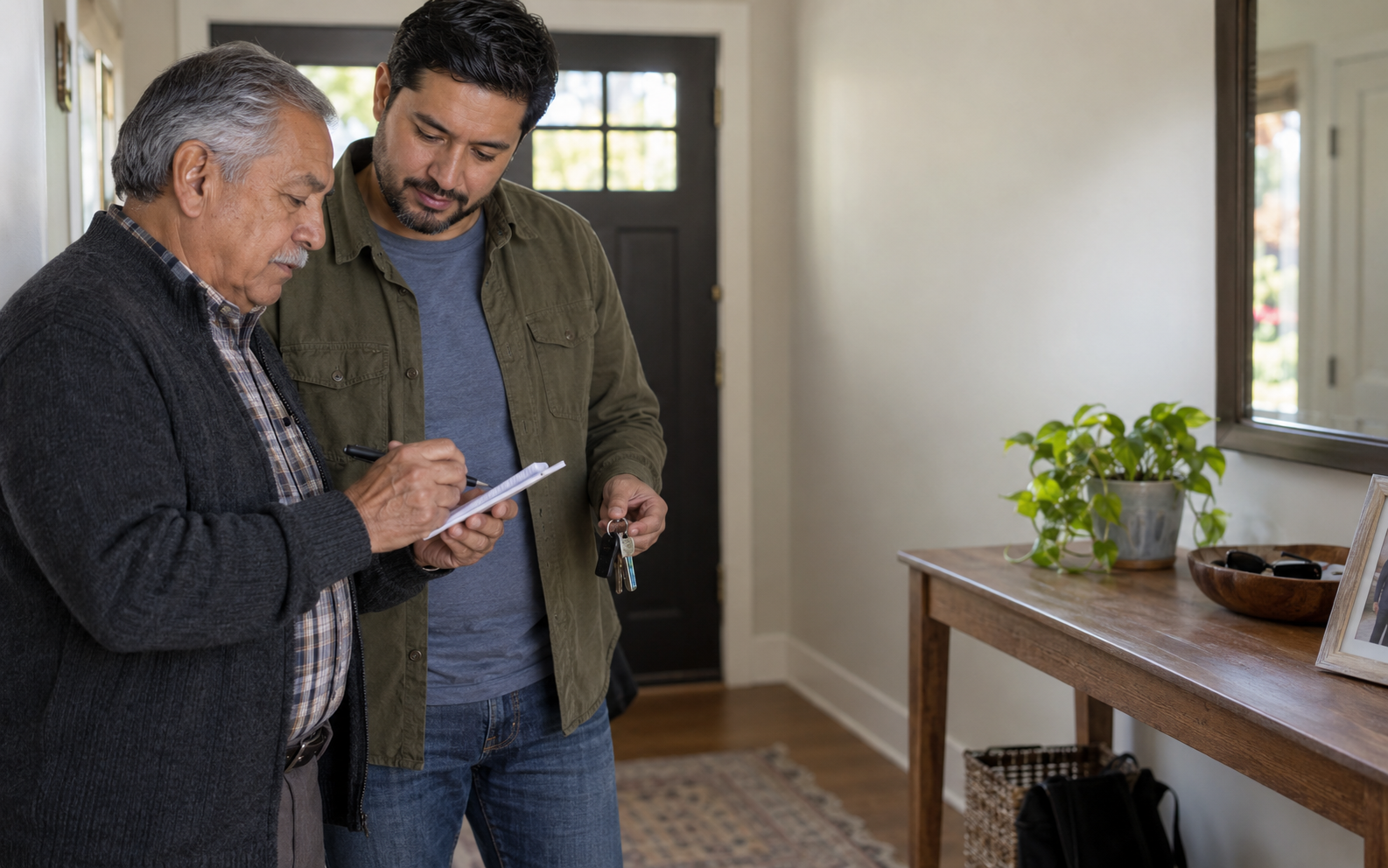
Dementia home-care planning works best when it starts with observable changes in memory, routine, judgment or evening patterns. It should not substitute for clinical evaluation or emergency help.
Do not buy the maximum amount of help by default.
What part of daily life is actually failing?
When does it happen often enough to need reliable coverage?
What happens when the usual family helper cannot cover it?
Which needs belong to a clinician rather than household support?
What changes the answer in Highland Park / University Park / Preston Hollow
- Travel time between home, appointments, errands and the people who can help.
- Which local resources, provider rules or transportation details need direct verification.
- How close reliable family or trusted contacts are when the normal routine breaks.
- Whether the home, schedule and household support can carry the plan week after week.
A practical way to decide
- Record the pattern
Write down what is changing and when it tends to happen. - Reduce friction
Simplify cues, routines, lighting, meals and transitions around the hardest parts of the day. - Plan supervision
Decide who notices when the pattern becomes unsafe or unmanageable. - Set escalation triggers
Identify the changes that require a clinician, emergency help or a different living plan.

Questions to ask before you decide
- What is the exact routine that needs a reliable answer?
- Who covers it now, and what happens when that person cannot?
- Which facts need direct confirmation in Highland Park / University Park / Preston Hollow before the plan is chosen?
- What change would tell us this plan needs to be revisited?
Keep the next step specific
Use the related guides below to organize the next decision. When you are ready to compare providers, confirm current availability, price and exact task scope directly.
What matters locally in Highland Park / University Park / Preston Hollow
For dementia planning in Highland Park / University Park / Preston Hollow, familiar routines matter, but so do supervision, caregiver backup and access to clinical evaluation when symptoms change.
Texas Health Presbyterian Hospital Dallas and major regional systems provide extensive rehabilitation and discharge-to-home infrastructure.
Use local medical and rehabilitation resources for evaluation and clinical treatment; household support should reinforce the daily routine rather than replace clinical care.
Central Dallas is denser than outer DFW, but congestion still favors a dedicated neighborhood travel planning.
When comparing schedules, ask whether the timing still works at the older adult’s actual address during the parts of the day that are hardest to cover.
Questions to answer before you decide
- What memory or judgment changes are happening, and when?
- Which supervision gaps are becoming unsafe or exhausting?
- Which new symptoms need clinical evaluation rather than a change in household support?