
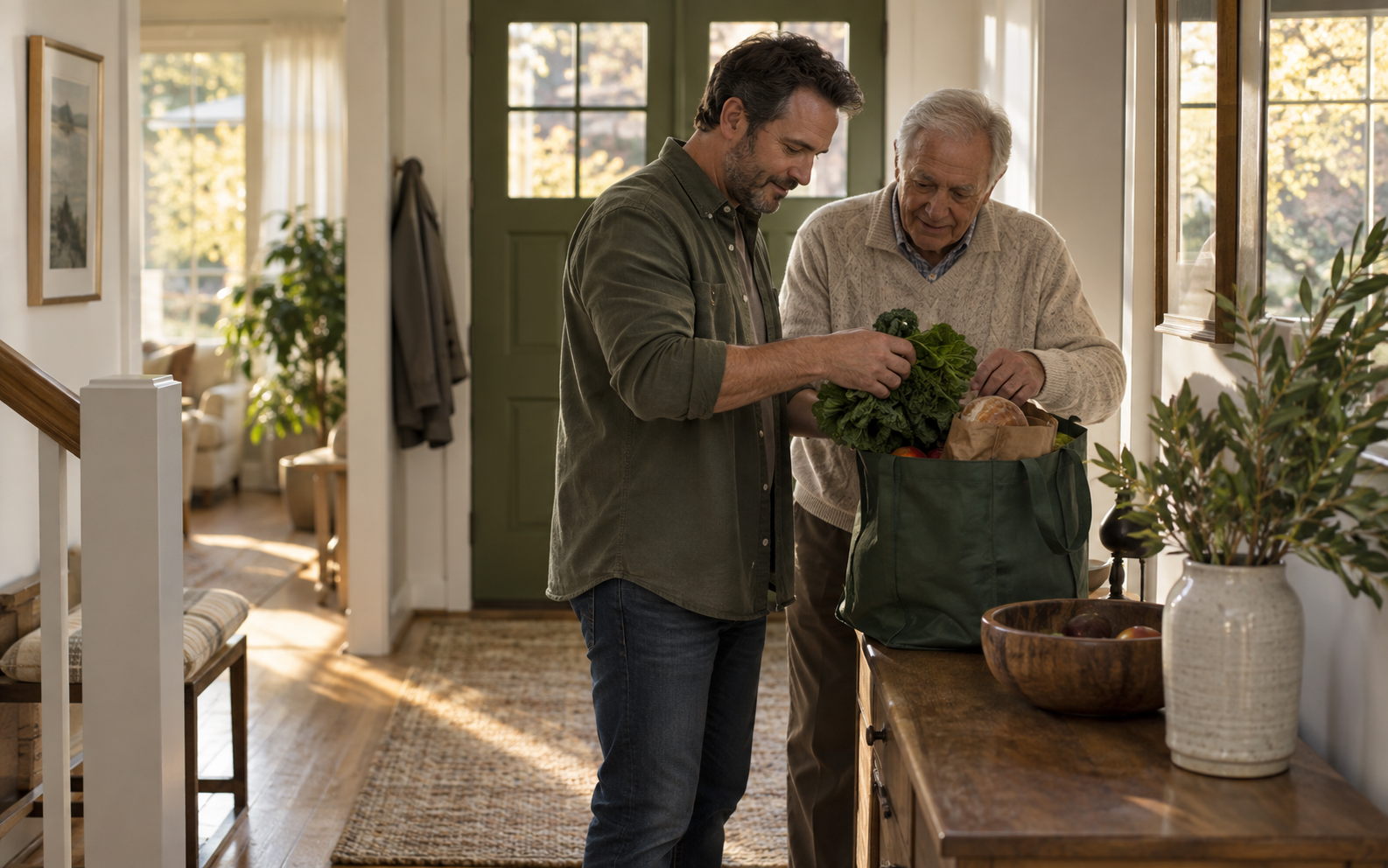
Stroke discharge planning is both clinical and practical. The treating team controls medication, therapy, swallowing, equipment and warning signs; the family still needs to organize daily routines, transportation and coverage gaps.
START WITH THE DISCHARGE TEAM. Confirm therapy, medication, follow-up, emergency instructions and equipment.
USE LOCAL POST-ACUTE RESOURCES. Oro Valley Hospital and Northwest Transitions provide nearby hospital and rehabilitation context within the Tucson care ecosystem.
MAP THE FIRST 72 HOURS. Assign meals, personal routines, transportation, nighttime coverage and skilled visits.
KEEP SKILLED CARE DISTINCT. Therapy, nursing, clinical medication work and swallowing management belong with qualified professionals.
ASSIGN FOLLOW-UP TRANSPORTATION. Dial-a-Ride may help eligible riders, but private-provider driving must be verified separately.
WATCH FOR CHANGE WITHOUT DIAGNOSING IT. New stroke symptoms require emergency action under the clinical plan.
ASK PRIVATE PROVIDERS FOR EXACT TASK BOUNDARIES. Transfers, medication help, start timing and service geography should be documented.
COMPARE MORE SUPPORT IF HOME CANNOT BE COVERED. Higher supervision or clinical needs may require a different setting.
Can home care replace stroke rehab? No. Can it provide nursing? Not unless separately qualified/licensed. What if symptoms return? Follow emergency instructions and call 911 when appropriate. Can every caregiver perform transfers? No.
Post-Hospital; Care After Fall; How Much Care Parent Needs; Transportation.
Oro Valley Hospital; Northwest Transitions; Medicare; regional stroke guidance.
Task scope; transfers; medication; start timing; CTA.
No therapy, nursing, swallowing or stroke-outcome claims.
Task scope | Transfer policy | Medication | Start timing
Primary care inquiry phone | Care inquiry form | Availability
Run structural QA; keep final claims blocked.
PROBLEM GUIDE — SITUATION/RELIEF
Build the household plan around the clinical plan.
Confirm instructions, follow-up, mobility limits and who owns each clinical question.
Cover meals, errands, safe routines, transportation and the gaps family cannot reliably fill.
Change household support as recovery milestones and clinical instructions change.