
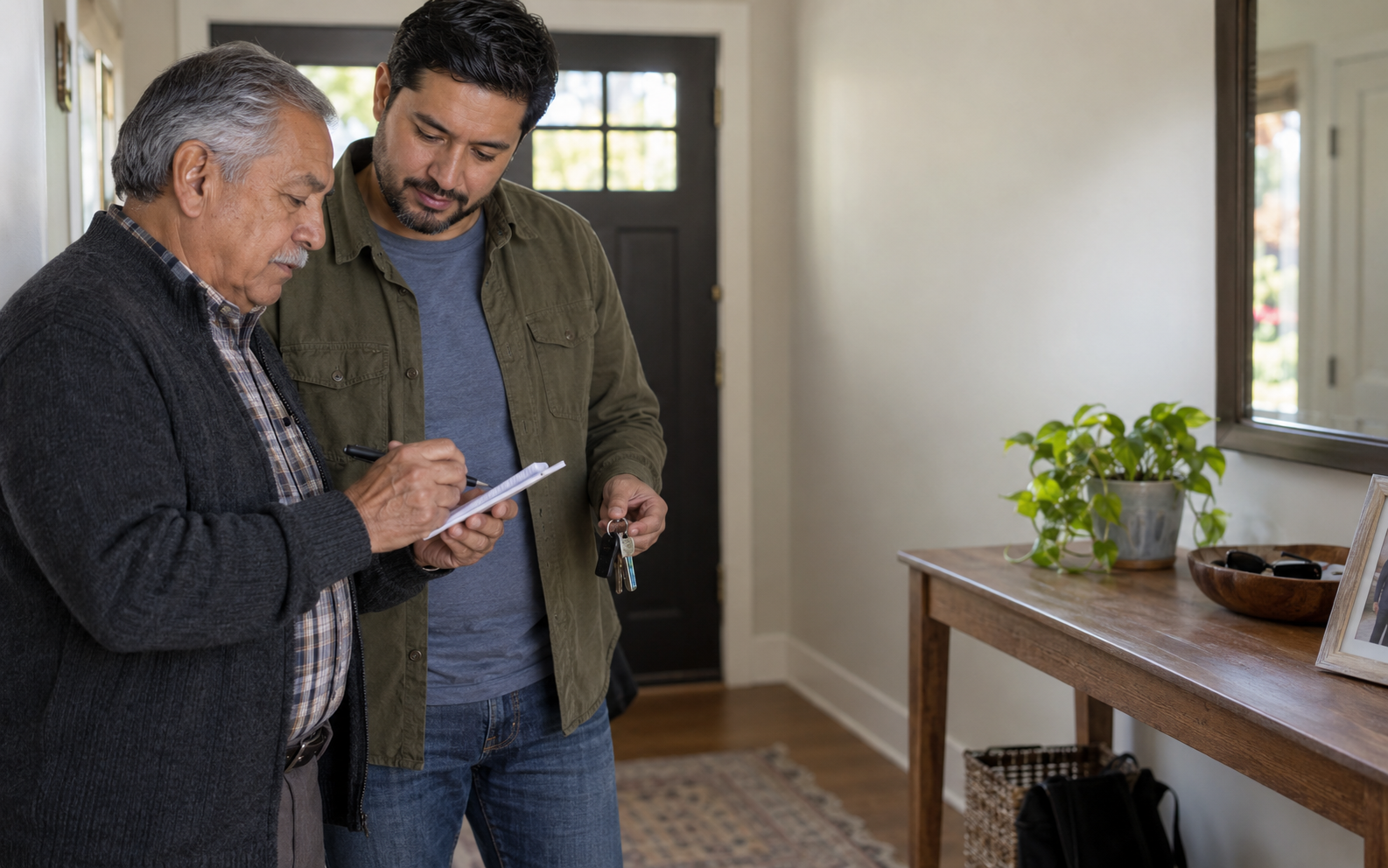
Coming home from a hospital or rehabilitation stay creates a household handoff. The discharge team controls the clinical plan; the family still has to organize meals, routines, transportation, family coverage and any non-medical help.
START WITH THE DISCHARGE TEAM. Confirm medication instructions, therapy, equipment, follow-up and warning signs.
ORO VALLEY HOSPITAL IS A LOCAL ACUTE-CARE ANCHOR. Its hospital and skilled-nursing resources make post-discharge planning especially relevant in a retirement-heavy market.
NORTHWEST TRANSITIONS ADDS REHABILITATION DEPTH. Rehabilitation remains a clinical service and should not be replaced by non-medical support.
MAP THE FIRST 72 HOURS. Assign discharge pickup, meals, bathroom/dressing routines, follow-up rides, family coverage and skilled visits.
PLAN TRANSPORTATION. Oro Valley Dial-a-Ride may help eligible riders, but program rules must be verified and a private caregiver's driving policy is separate.
ASK A PROVIDER FOR EXACT START TIMING. Do not rely on generic “after hospital” language; verify actual capacity, minimums and service geography.
REASSESS AFTER A FEW DAYS. If the plan is not covering routine or clinical needs, revise it before a crisis.
ESCALATE CLINICAL CHANGES. New symptoms belong with the healthcare team or emergency services.
Can home care replace home health? No. Can a caregiver drive to follow-up visits? Only if the provider policy allows. How quickly can support start? Verify actual capacity. Which local anchors matter? Oro Valley Hospital and Northwest Transitions.
Stroke Discharge; Hip Replacement; Care After Fall; Transportation.
Oro Valley Hospital; Northwest Transitions; Sun Shuttle/Dial-a-Ride; Medicare.
Start timing; task scope; transport; service area; minimums; CTA.
No hospital affiliation, therapy/nursing substitution or immediate-start promise.
Start timing | Task scope | Transportation | Service area
Primary care inquiry phone | Care inquiry form | Availability
Run structural QA; keep Claims/Conversion blocked.
Build the household plan around the clinical plan.
Confirm instructions, follow-up, mobility limits and who owns each clinical question.
Cover meals, errands, safe routines, transportation and the gaps family cannot reliably fill.
Change household support as recovery milestones and clinical instructions change.