
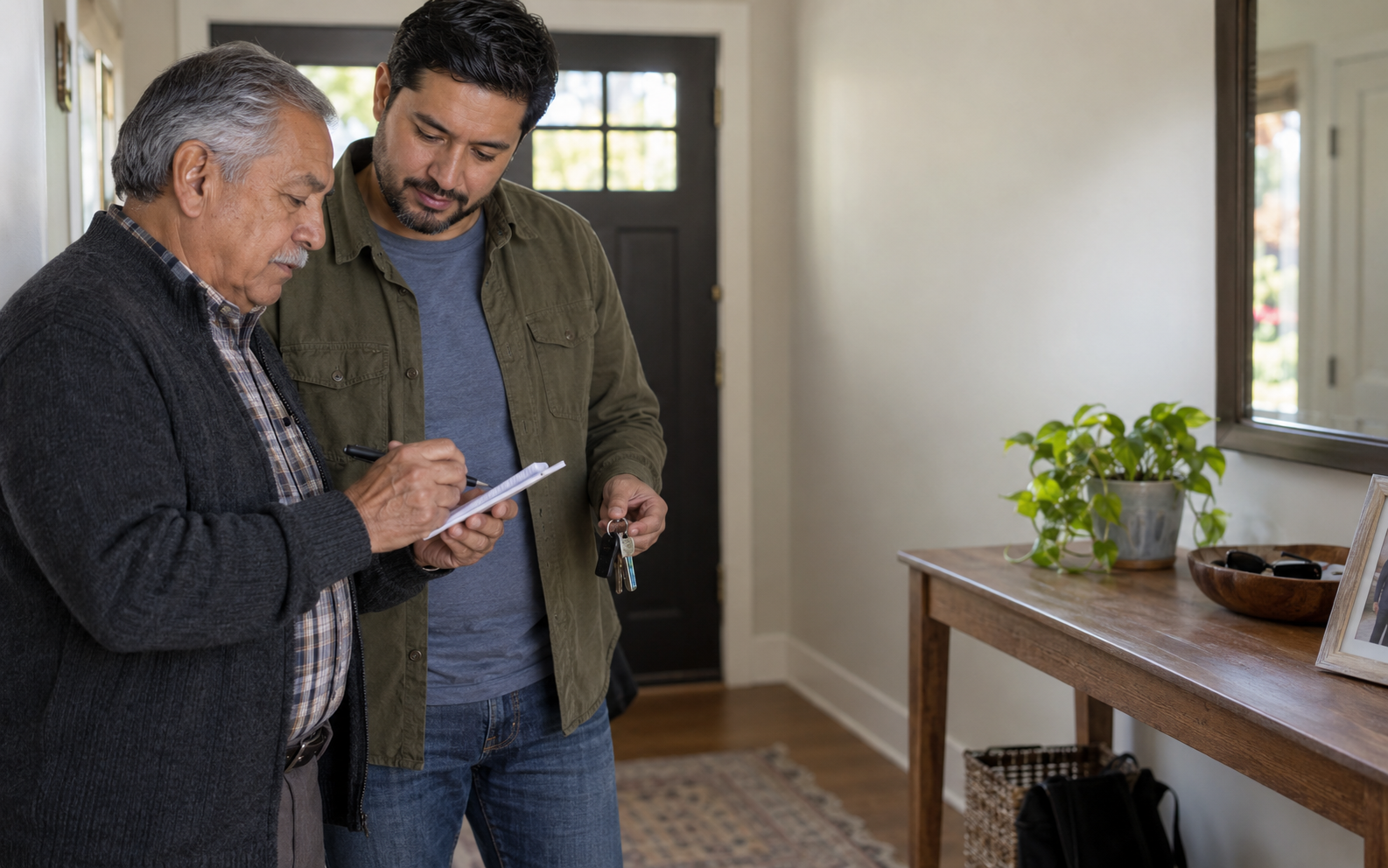
When a parent can still make decisions but bathing, dressing, toileting, grooming or moving through the morning has become difficult, the problem is not necessarily that they need to leave home. The useful first step is to identify the exact hands-on tasks that are hard, separate non-medical help from clinical care, and verify what a provider is actually permitted and prepared to do.
START WITH THE TASK, NOT THE SERVICE LABEL “Personal care” can mean different things in different programs and provider settings. Idaho DHW lists personal care as one of the services that may be available through Medicaid HCBS for eligible members, alongside homemaker, home health aide, adult day and respite. That public-program list is useful context, but it is not a promise that every private provider offers every task or participates in Medicaid.
Do not buy the maximum amount of help by default.
What part of daily life is actually failing?
When does it happen often enough to need reliable coverage?
What happens when the usual family helper cannot cover it?
Which needs belong to a clinician rather than household support?
Care Needs Assessment
Get a practical first plan. The tool gives you a result you can use, print or bring into a care-planning conversation.
Use the interactive toolBuild The Day Around The Hard Moments
Families often need help at specific points: getting out of bed, washing and dressing, preparing breakfast, using the bathroom, moving safely through the home, or settling in for the evening. Map those moments first. Then ask a provider to confirm which tasks are within scope, whether there are minimum visit lengths, and what happens if the need changes.
Transfers And Medications Need Precise Answers
Do not assume a caregiver can perform stand-pivot transfers, use a gait belt, operate a mechanical lift, provide a two-person assist, or handle medications. Those are high-risk details that depend on provider policy, training, the person’s condition and applicable rules. Ask exactly what is allowed and what requires a nurse, therapist or another level of care.
Keep Rehabilitation And Personal Help Separate
Kootenai Health provides rehabilitation services in Coeur d’Alene and Post Falls. After an injury, surgery or hospital stay, a person may have prescribed physical, occupational or speech therapy while also needing practical help with daily routines. Non-medical assistance can complement a recovery plan, but it should never be presented as replacing therapy, nursing or medical assessment.
Use North Idaho Resources To Fill Gaps
AAA North is based in Coeur d’Alene and serves Kootenai County. Idaho Commission on Aging also provides Information & Assistance to help families understand what resources exist, whether they may qualify, what costs apply and how soon services can begin. Public resources, family help and paid support can be combined rather than treated as all-or-nothing choices.
Ask About Training Without Overgeneralizing The Rules
Idaho DHW has specific training and demonstrated-competency requirements for providers working in certain Aged & Disabled waiver services. That does not automatically define the credentialing of every private-pay caregiver. A better question is: what training applies to this service, how is competency checked, and who supervises the work?
When Personal Care May Not Be Enough
Escalate when the person needs skilled nursing, new medical assessment, therapy, unsafe transfer assistance, rapidly changing cognition, repeated emergencies, or supervision that cannot safely lapse. Staying home can be a good option when the actual needs can be covered safely—but it should not be the predetermined answer.
In-Home Senior Care; Dementia Home Care; Respite Care; Post-Hospital Home Care; Care After a Fall; How Much Care Parent Needs.