
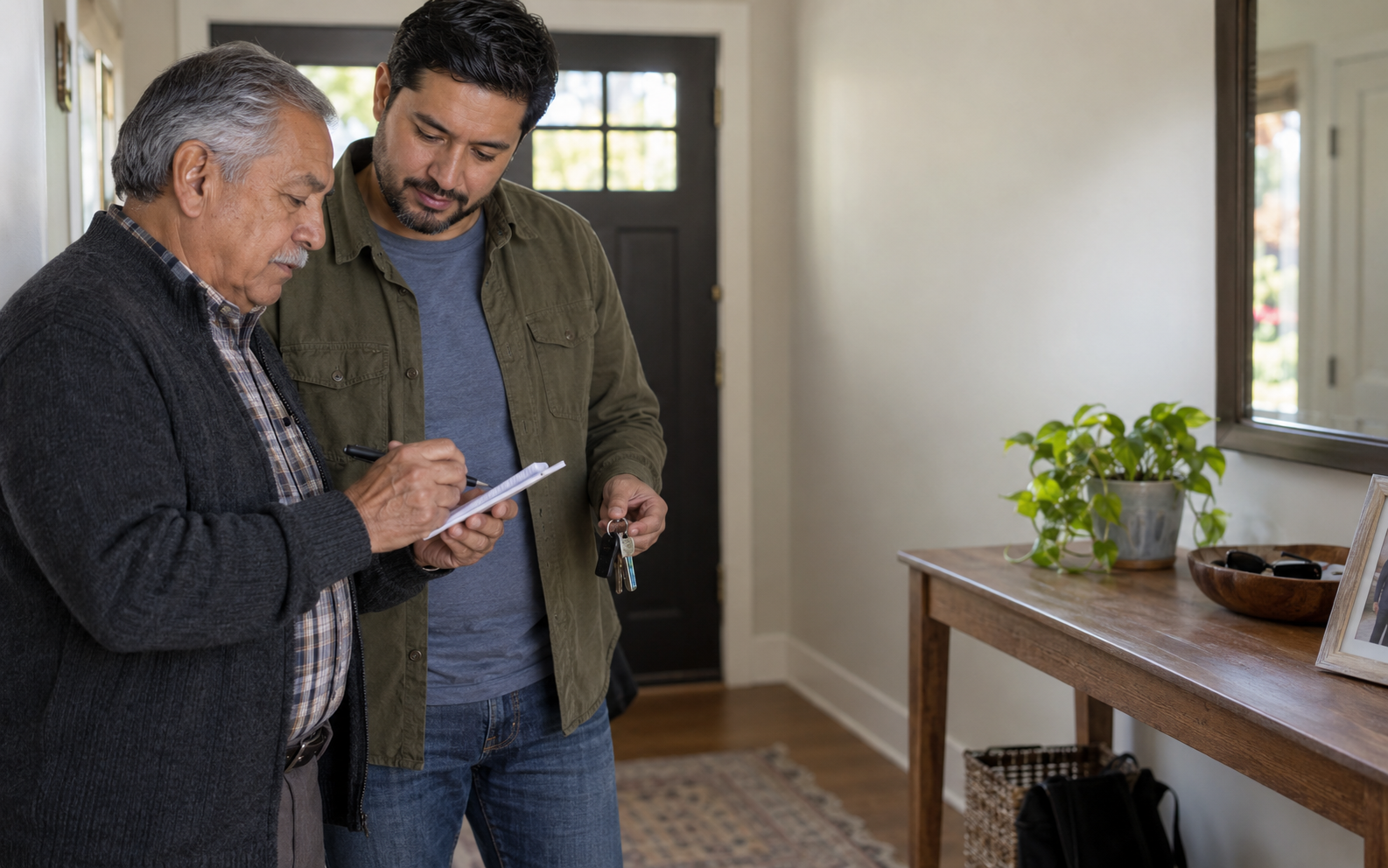
Companion care is usually a question about routine, connection and dependable presence. It does not automatically answer hands-on, clinical or safety needs.
Do not buy the maximum amount of help by default.
What part of daily life is actually failing?
When does it happen often enough to need reliable coverage?
What happens when the usual family helper cannot cover it?
Which needs belong to a clinician rather than household support?
What changes the answer in Buckhead / Sandy Springs
- Travel time between home, appointments, errands and the people who can help.
- Which local resources, provider rules or transportation details need direct verification.
- How close reliable family or trusted contacts are when the normal routine breaks.
- Whether the home, schedule and household support can carry the plan week after week.
A practical way to decide
- Describe the lonely or unreliable part of the week
Name the meals, errands, activities or check-ins that are slipping. - Match timing to the routine
Focus on the hours when company or structure would make the biggest difference. - Decide what else is needed
Separate companionship from personal-care, clinical or transportation needs. - Build a backup
Plan for the days a usual family member cannot be there.

Questions to ask before you decide
- What is the exact routine that needs a reliable answer?
- Who covers it now, and what happens when that person cannot?
- Which facts need direct confirmation in Buckhead / Sandy Springs before the plan is chosen?
- What change would tell us this plan needs to be revisited?
Keep the next step specific
Use the related guides below to organize the next decision. When you are ready to compare providers, confirm current availability, price and exact task scope directly.
What matters locally in Buckhead / Sandy Springs
Companion support in Buckhead / Sandy Springs is most useful when it protects a real routine—meals, errands, activity or dependable presence—rather than filling time for its own sake.
For a return home after hospital or rehabilitation, assign the first week before discharge: rides, meals, home access, follow-up appointments and who notices if recovery is not going as expected.
Assign ownership for the routines that matter most so the plan does not depend on whoever happens to be available that day.
Northside Hospital Atlanta sits in Sandy Springs; Emory Saint Joseph’s is in the same medical corridor and Emory care management explicitly plans post-hospital private-duty, home-health, rehab and other discharge services.
Knowing the likely hospital and rehabilitation pathway helps a family plan transportation, follow-up and the first days back at home.
Questions to answer before you decide
- What changed during an ordinary week?
- Which part of the plan has no reliable backup?
- What new problem would make you change course?