
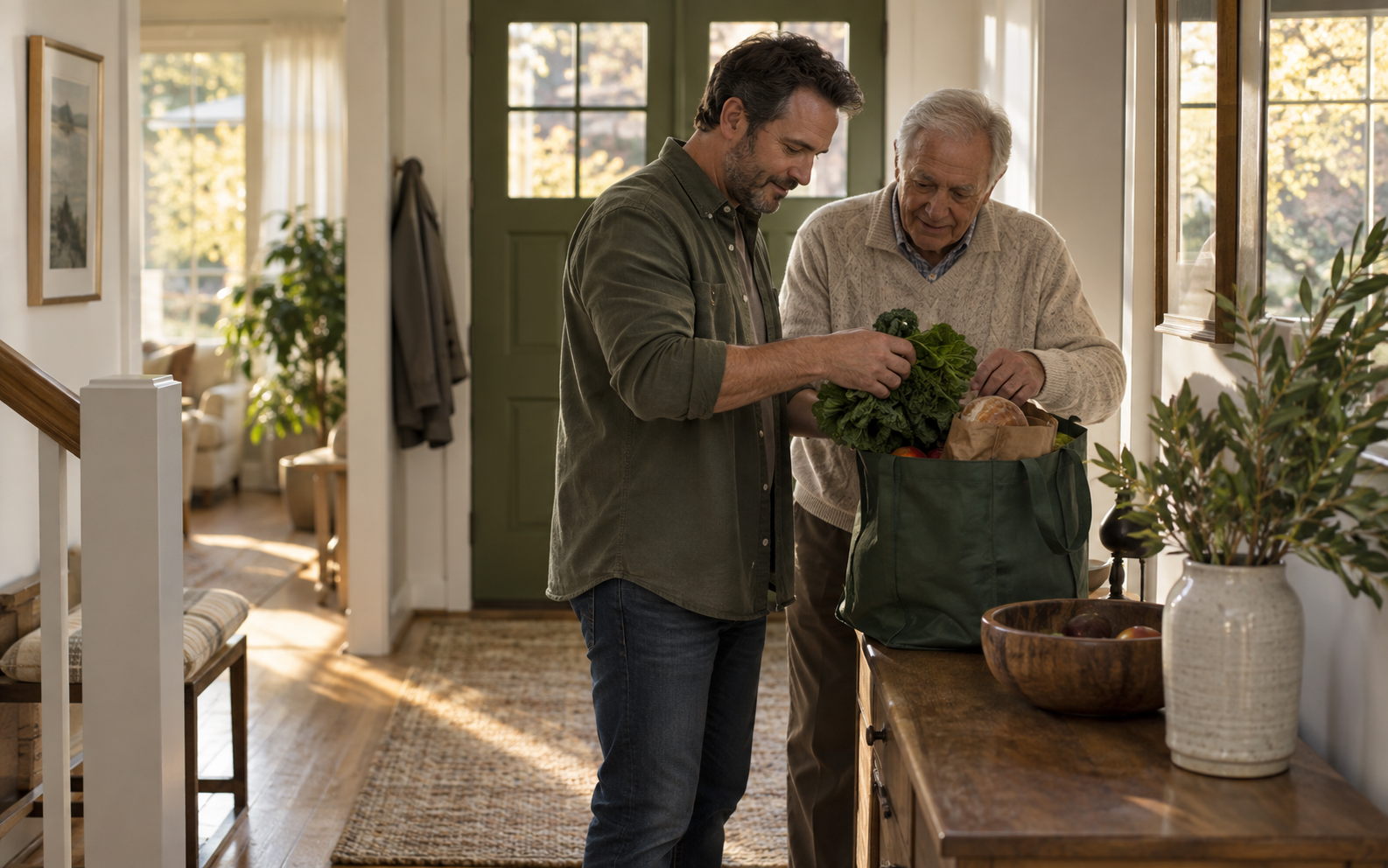
The house is only one part of staying home.
Layout, stairs, bathroom, lighting and daily setup.
Family, neighbors, paid help and emergency contacts.
Appointments, groceries and community access.
What changes the plan after a fall, illness or caregiver loss?
Quick answer
The strongest aging-in-place plans use the home’s advantages without ignoring its friction. A familiar neighborhood can be a major asset, but stairs, driving distance, isolation or deferred maintenance can quietly make the plan harder over time.
Use this as a decision tool for Sarasota, Longboat Key and Siesta Key: identify what is happening, see which local factors change the plan, and verify the questions that cannot safely be answered from a website.
Two local facts are worth carrying into the family conversation. Median household income is $83,416, median home value is $411,800, and homeownership is 76.7%. Those figures help frame private-pay and aging-in-place decisions, but they do not tell us what any one family can afford. Across the broader local market, 459,547 people with 37.5% age 65+, 18.6% age 75+, and 5.1% age 85+.
The local facts that matter
The local research changes how a family should think about timing, alternatives and logistics. In Sarasota, Longboat Key and Siesta Key, the research points especially to aging in place; long-distance family; post-hospital. The market is best understood as a affluent retirement coastal.
- Housing and household context. Median household income is $83,416, median home value is $411,800, and homeownership is 76.7%. Those figures help frame private-pay and aging-in-place decisions, but they do not tell us what any one family can afford.
- Older-adult context. Across the broader local market, 459,547 people with 37.5% age 65+, 18.6% age 75+, and 5.1% age 85+.
- Local logistics. High coastal/seasonal routing friction: constrained bridges, US-41/I-75 and winter congestion make island/mainland zoning important.
- Hospital and rehabilitation context. Exceptional local post-acute depth: Sarasota Memorial's 60-bed hospital-based inpatient rehabilitation unit anchors discharge-to-home demand.
- Local family pattern. Local planning commonly involves aging in place; long-distance family; post-hospital as recurring family-care themes in Sarasota, Longboat Key and Siesta Key.
Local logistics. High coastal/seasonal routing friction: constrained bridges, US-41/I-75 and winter congestion make island/mainland zoning important.

Build the plan in this order
When the situation feels messy, put the questions in this order:
1 Audit the home before adding services. Look at entrances, stairs, bathrooms, lighting, trip hazards, bedroom access, emergency exits and the distance to everyday needs.
2 Map the weekly logistics. Transportation, groceries, medical appointments, social activities, household upkeep and family visits are part of aging in place.
3 Layer support instead of overbuilding it. Home modifications, community programs, technology, family help and in-home support can solve different gaps.
4 Create move-or-reassess triggers. Decide what changes, repeated falls, unsafe wandering, extensive nighttime needs, severe isolation, or an unworkable home, would require a new plan.
Make the concern observable: for seven days, note the time, task and consequence each time someone has to step in. That record is a better starting point for aging in place than a general feeling that “more help” is needed.
Know what kind of help you are looking for
Use this page as a planning guide, then confirm provider-specific details directly before making a care decision.
Clear boundaries make the page more useful: family, community, non-medical and clinical roles can be coordinated without being blurred together.
Questions to ask before you commit
Useful questions for the next conversation include:
- Which parts of the house are hardest now?
- What happens if driving stops?
- Which weekly tasks depend on one family member?
- What events would make the family reconsider the current home?
The answer should be concrete enough to change the plan. If scope, timing, escalation, eligibility or what happens when needs change is still vague, the family still has an unresolved decision.
Common questions before the next step
What should we change first?
Start with high-consequence risks and recurring friction: bathroom safety, stairs, lighting, transportation and the tasks family is repeatedly rescuing.
Can a large house become part of the care problem?
Yes. Maintenance, distance between rooms, stairs and isolation can add burden even when the home is emotionally important.
Does aging in place mean never moving?
No. It means making a deliberate plan to stay home as long as it remains workable and safe, with clear triggers for reassessment.
Useful next steps
Should Not Live Alone | Senior Transportation | Home Care vs Assisted Living | In-Home Senior Care.
Start with the part you can answer now
The next step should reduce uncertainty, not add another layer of pressure. Write down what is changing, what the family is already covering, and which question still does not have a workable answer.
Talk Through Your Care Needs